
Techland are still beasts of zombie horror


Pros
- Vastly improved weapon dynamics
- Better horror
- Amazing sound design
- Satisfying gameplay loops
- Quality story moments
Cons
- Chimera box feature a bit of a let down
- Level design can be really good to really lame
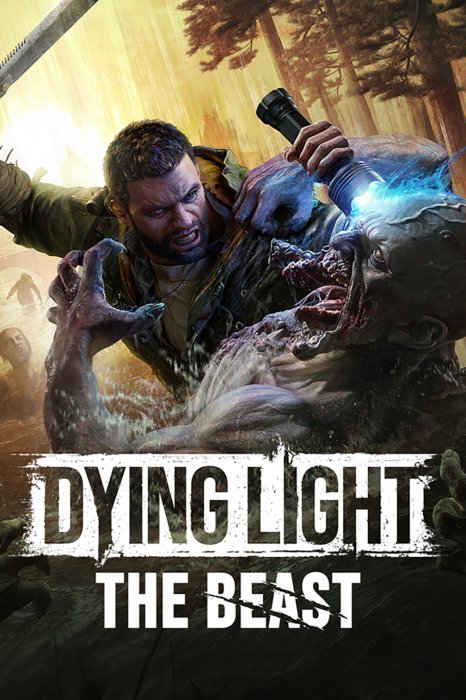
As someone who was there back in January 2015, I got to witness the meteoric rise of the Dying Light franchise seemingly out of nowhere. The first game offered solid zombie action, a great onset of horror themes, and a somewhat revolutionary parkour system that we missed since Mirror’s Edge was so unique for in 2008. Fast track a decade later and Techland has made Dying Light 2 (a game I gave a 9/10 because I loved the parkour changes so much and some of the multiple choice endings) and now Dying Light: The Beast, a game that takes the framework around 2, but converts into the Dying Light 1 setting.
Originally, Dying Light: The Beast was supposed to be a DLC for Dying Light 2. A larger than normal one at that. But Techland decided that with enough changes from community feedback, that it is better off being its own game. I can tell you the changes they made with the game fit that profile, as The Beast is its own beast.
The stage is set

Here’s your antagonist. Doesn’t he look it? Image via Gamer Guides / Techland.
Castor Woods is the new area that players find themselves in. This remote region of the Alps sees what was once a quiet industrial and farming town now turned into an undead nightmare. While the threat of the infected lurk, just as they did in Harran and Villedor, there’s an evil mastermind that controls the region. Big pharma occupied the area pre-fall, and now post-fall it makes the scientific region extremely strong for testing out on the infected.
You awake as Kyle Crane, the original protagonist in Dying Light 1. After the events of the first game, then followed by its major DLC The Following, you are a half-human, half-volatile hybrid, and are somewhat able to control it. You are introduced to the big bad of the show, The Baron, an Englishman CEO who controls this big pharma corporation that runs scientific tests on the virus. With the fall, this company is in a prime spot to use its scientists and military control granted post-fall to work on experiments, which leads to the Baron being the big bad of the area after 11 years of absolute power.
As Kyle Crane, it’s just another day of experimentation. Although, something is off. Strangers approach you to set you free, alarm bells are ringing. This isn’t normal. The inciting incident, another person like you turns up, then you break free. You crawl out of the now infected-run lab, and escape to freedom. Here, you’re introduced to a friend who wants to help, with their own mysterious motivations behind it (Hakan and Jade re-run?).
Now, out in the world, you will do main story missions which take you to new locations and progress and update the map. You’ll naturally find new safe zones and get more side quests, the standard Dying Light formula on display.

A lovely more relaxed storyline that reminds you that the characters are human. Image via Gamer Guides / Techland.
Both the main story missions and the side missions, in my opinion, are great. The main story is somewhat not as daring as it could be. But, the way the main storyline progresses clear themes that Techland wants to take the game’s future down makes it very interesting. As you can guess, it’s about controlling the infection with all the science stuff going on, and Kyle Crane is half infected after all, with him getting new monster-like powers as shown pre-release. There’s more to it than that without spoiling it, but the story goes in interesting places.
As for the side quests, they are also very strong. In many ways, it reminds me of the first game’s storylines. Those are all about the little moments as the world goes to hell and helping people in their various desperate moments. However, the thing I like about The Beast’s quests is that they are designed with strong emotional storytelling in mind. It’s about helping people, seeing humanity even in the darkest moments, what makes us human. Dying Light has always had strong motifs, from its Stay Human tagline in 2, to The Beast within us in this game. These come out strongly in the storytelling here and it works very well.
Combat

I really like this sword I got from a blueprint. So I upgraded it to legendary and didn’t look back. Image via Gamer Guides / Techland.
The combat in Dying Light: The Beast has moments of mixed bag, but I for one find it largely enjoyable.
I’ll get the bad points out of the way first. The Chimeras, the new big bads of the infected world, are just slightly harder special infected. They have a boss health bar, have models that are somewhat similar to other Chimeras or infected (like Demolishers), and a largely similar moveset to them. They are tough to beat, and when you’re still leveling up, they can be quite hard due to weapon balancing. However, Beast Mode essentially trivializes those fights.
Beast Mode is a limited time super weapon, and with how strong it gets, it can easily 1v1 a Chimera when you end up fighting them. A full Beast bar can even spark a pack of Volatiles out too! It’s a bit of a shame really considering the marketing behind them. The only one that was interesting was technically the last Chimera in the storyline, which had a little mechanic about charging it into acid so you can deal more damage to it. Outside of that, a stealthy variant was kinda cool, but the others were less so.
The other bad point is the Biter grabbing. I’m personally okay with Biters being able to swarm and grab often, but many are not. It makes sense after watching shows like The Walking Dead and other zombie horrors. But, they do grab often. By the end of the game, I was largely able to use my preferred weapon blueprint to interrupt lunges and avoid the hassle, but I did occasionally fail a parkour and get grabbed, which slows you down a lot compared to both Dying Light 1 and 2.
There’s a playstyle for everyone and they all work rather well.
On the other hand, I’m a big fan of other areas of combat. The game has made the arsenal of weapons much more fun to use. Guns are now a big part of it and in the early and mid game, guns and ammo are scarce, so you only get to use them a bit here and there. However, as you reach the later game and levels, you tend to be able to afford ammo and find more of it, especially on main story plot points. You can easily get into gun fights, or be okay having a full weapon slot of guns and ammo if you wanted to.
Meanwhile, the mixture of weapons feels good. The bruiser playstyle of two-handed weapons feel hefty, and the one-handed ones feel faster or clunkier, depending on the type. One-handed hammers tend to shove enemies around more, while blades dismember better. Even daggers feel great with their extremely fast attack speed and strong DPS (damage per second) making head chopping feel good or for throwing weapons. Additionally, bows and arrows are much easier to come by, which makes that stealth archer gameplay, picking off key infected or human enemies feel even better in that survival setting. There’s a playstyle for everyone and they all work rather well.
There’s also a new feature, where you can use throwing knives in grapple settings. I am a big fan of this, as it makes for faster escapes from the annoying grabbing. You can also use them in stealth takedowns too, as a means of getting a stealth kill at pace. This opens up some creative moves when tracking enemies in Dark Zones or during missions where you can use stealth if you’d like.
The other point that I’m a big fan of is the blueprint system. Each upgrade isn’t just stat progression - it’s personal investment into your preferred build and playstyle. You want to explore Castor Woods to find cool blueprints. You then want to try those blueprints out with weapons and different mod parts to find your dream setup. You can then upgrade your blueprints with field manual pages to enhance them, making them stronger, more durable, and increase their perk power ups. I ended up upgrading a blueprint I got to legendary for a longsword and molotovs for example, as that is how I ended up playing the game. I got my build I liked from playing naturally and it made me happy. And it can make you happy with a rewarding scavenging gameplay loop too!
The Open World

There’s some great parkour set piece moments or design. But other areas not so much. Image via Gamer Guides / Techland.
The Open World is where I find the most mixed response to the game as it feels like I’m missing something.
Compared to the first Dying Light 1, the world felt much more refined as a parkour town. Meanwhile in 2, there were a lot of parkouring elements, with races to test your skills out. There were also a lot of survivor settlements related to the personal choice moments and a bunch more interactivity.
The Beast misses out on this. You get a few car races as optional activities, but outside of that, you’re largely turning on a few safe spots to rest at, or a few Dark Zones to loot blueprints or crafting materials from. While these content loops are pretty good and are self-sufficient in of themselves, it does run evident that’s all there is really outside of some easter egg and collectible hunting. I wish there was something a bit more than just those to get my teeth stuck into.
The open world is also a bit strange to navigate. From the Parkour intensity of Old Town, to the bouldering areas around the National Park and the other more naturalistic areas, those all feel fine to navigate around. The bouldering side of things is quite nice - it’s like Techland saw its native bouldering champion, Aleksandra Mirosław, ascend a mountain and Techland developers thought - “yes, let’s make Kyle do that” with successful implementation.
Castor Woods whispers the stories of its inhabitants through environmental storytelling
However, there are other areas that are sort of just flat and parkourless. This is where the truck comes in handy from The Following. That game had its moments where it too suffered with flat simple drives or runs across a field. I feel like there should be more ways to parkour around so you have a choice on how you explore in those areas, bar some awkward platforming to use the power lines.
What the game does well is making treasure hunts. You’ll find treasure maps around the place, with hints to where there’s loot to be found. These give you something to look forward to as you play. Meanwhile, you can find these treasure loot spots organically yourself with no hints, leading to huge payouts for items, cosmetics, and blueprints, which feels super rewarding when that happens. It also incentivizes you to check larger buildings, make use of survivor senses to see if something gets picked up, and more so you get that “ooh shiny” moment.
I also am a big fan of making loot feel like Dying Light 1. Placement follows believable logic rather than arbitrary distribution. Hospitals yield medical supplies because that’s where they belonged before the world ended, same goes for metals in DIY stores, wires and valuables in stores, and more. This environmental coherence makes discovery feel earned rather than random, unlike Dying Light 2. You’re not just finding loot, you’re uncovering remnants of a world that made sense, leading to a much more fulfilling immersion.
However, it’s the small details like finding herbs more in the outdoor areas or rooftop gardens, to Resin and Feathers seemingly being more common in bird boxes, or in the more nature-themed areas compared to the Old Town. Castor Woods whispers the stories of its inhabitants through environmental storytelling - hydroponic gardens wilting in basement hideouts, hastily scrawled notes from survivors who chose surrender over struggle. These fragments don’t stand out by themselves; they reward the observant player who pauses between the chaos to read the room’s history and get an idea of what took place.
The Horror

A dark cave with screamers, volatiles and virals. It is rather tense with the darkness. Image via Gamer Guides / Techland.
On the final point, I want to especially shout out the horror in the game. The Beast transforms night from obstacle into predator. Darkness becomes tactile - thick enough to hide in, yet smothers you with the tension of the atmosphere. Volatiles hunt with pack intelligence now, their coordination turning every shadow into potential ambush. The horror isn’t jump scares (though that does happen from time to time); it’s the slow realization that you’re being herded, and you need to think and act fast to get out without a nasty XP penalty for dying.
The game has done a lot of work in making it easier to navigate in the dark too. There’s a lot of sound work done in the game so you can listen out for noises. These noises tend to be distinct, so you can identify where hordes of Biters are and the whimpers from Virals, or to locate where Screamers might be hiding. It helps to add to the horrors of the night, or when looting really dark places where you don’t want to turn your flashlight on.
These noises tend to be distinct, so you can identify where hordes of Biters are and the whimpers from Virals
Because of how deadly the night is, outside of having your Beast Mode ready to pummel a Volatile to bits, it makes you want to secure those Safe Spots and Zones. It’s also the reason why it wants to progress the main story to unlock the power relay side content, so you can turn on the car and fence traps the other games had. Those aren’t on by default, as the world’s infrastructure has failed. So, by gating you from these, it makes the game more tense for many activities. While it can be perceived as a bad thing, it’s something I quite like about it.
I also love how the game does its best to put you into night time. It was easy enough to avoid in the other games. However, you’ll find several side missions or main story make you play at night, either through requirements or triggers. Or, you get stuck in some harder area that it naturally becomes night time by the time you can escape. It makes you think about time much more, and when you hear that watch bleep, you know you need to get a move on. It’s all about that tension and sudden “oh no!” moment that tells you that night time has done its job very well for the horrors that await from it.
Final Thoughts
If you read this far then awesome! Trying to score this has probably been the hardest part of writing up my thoughts. Reviewers fallacy if you will. Being fortunate enough to review the other Dying Light games, I gave the sequel a 9/10 many years ago. However, this is infinitely better to me than Dying Light 2 for the reasons why I loved the first game. I think I need to accept that Dying Light 2 is a parkouring masterpiece, while The Beast is an exceptional survival horror. That thinking led me to my score here.
The attention to detail in the game is crazy good. It hits what people wanted from the first game that was missing in the sequel. It does sacrifice some of the stuff that made the sequel great, but it’s fine to make each game stand out better.
With that said, I do love the game a lot, even with its lack of width in some of the content department and level design pieces in certain areas. If you’re someone that wants a newer Dying Light 1, go and play The Beast when you can. You can easily get 30-40 hours out of it. If you’re looking at that playtime and the price, then maybe wait for a 20-30% off sale as you’ll enjoy it more. Regardless, The Beast is a fantastic game I highly recommend that’s worth the asking price.
Beastly
A game that goes back to its roots incredibly well. Dying Light: The Beast captures the horror and survival horror RPG of the first game, and really helped to build where the future of the series is going.
Gameplay:
Sound:
Graphics:
Story:
Value Rating:

No Comments