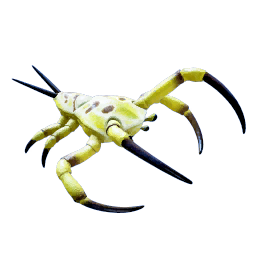
Tongue Thief
Databank Text
Ostrakonskelos glossaklept, the hard-legged tongue thief. A parasitic crab or louse that dwells in the mouth, causing intense and unremitting hunger.
-
Crablike body plan
A close relative of other Protean crabs, belonging to the infraorder Adulati. The segmented body has two cerci, nerve-rich organs which evolved from legs. The mouthparts are simple. The tongue thief relies on its host to chew food. -
Parasitic hijack
Tongue thieves mimic other prey species until swallowed, then use a numbing agent to paralyze the predator’s jaw long enough to anchor to the tongue. This numbing agent blocks the nerves that signal satiety (fullness) to the brain. -
Semi-cooperative hunting
Although they are parasites, tongue thieves’ small eyes and grasping limbs help the host latch onto food. -
Reproduction
Tongue thieves anchor eggs or spermatophores in the mouth of their host, where they wait for a thief of the opposite sex to arrive. Infant tongue thieves (called manca) pass through the host’s digestive tract. -
Possible cultural function
In the same way some human cultures use capsaicin in food, it is conceivable that other organisms might develop a taste for the tongue thief’s numibng agent. Personal experimentation would be ill-advised.
Assessment: expel parasite to reduce host hunger. Be alert for juveniles who may attempt to infest your mouth.

No Comments