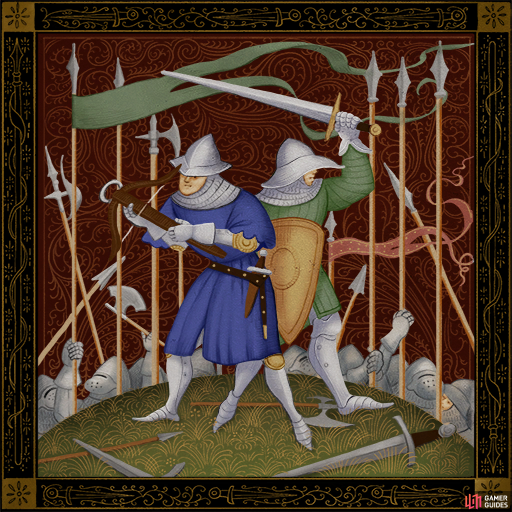
Druhý lateránský koncil (r. 1139) zakázal kněžím oblékat se do bohatých šatů, jeptiškám zpívat spolu s mnichy a dobrým křesťanům používat kuše proti ostatním křesťanům a katolíkům. Kuše byla nazvána ďábelskou zbraní (latinsky arma diaboli), protože snadno dokázala prorazit i tu nejpevnější tehdejší zbroj a, na rozdíl od luku, znamenal zásah z ní téměř jistou smrt. Kuše ale zůstala i nadále používána a vylepšována. Původní dřevěná ramena postupně nahradila silnější (a tužší) ramena z kompozitu a nakonec oceli. Ruku v ruce s tím se také zavedlo několik nových natahovacích mechanismů, od síly paží přes páku až po hever. Ale i ta nejsilnější kuše nedokázala prorazit kvalitní ocelový hrudní plat, a nakonec předala titul nejsmrtonosnější palným zbraním.
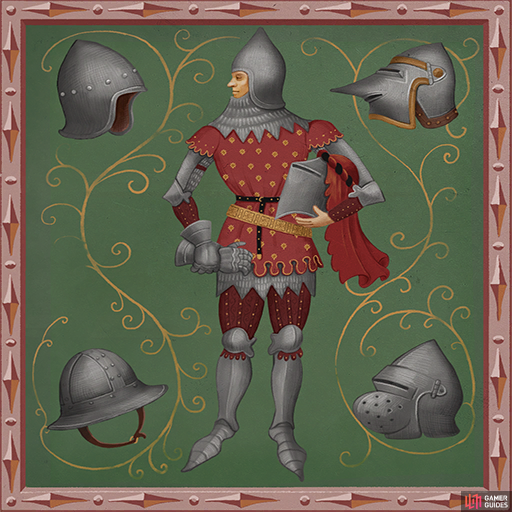
In the 14th century, manufacturing capabilities expanded, leading to the production of stronger and often combined armours. Older chainmail armours transitioned to plate armour due to advancements in steel processing and the ability to forge larger pieces of metal on automatic hammers. Soldiers’ heads were protected by helmets such as the cervelliere (known as the “iron hat”), bascinets, and helms. Armours were crafted by armourers or helmet makers, typically from a single piece of hardened plate (skull caps, bascinets) or riveted together from several smaller pieces (cervelliere, sallet). The finest armour of the early 15th century was considered that made in German and Italian lands. “Combined type” armours were used by heavy cavalry - they consisted of chainmail supplemented with plate armour covering the limbs and simpler forms of cuirasses, plate coats, or quilted jackets. Some plate coats and breastplates were equipped with a hook for the knight’s spear. If the armour lacked a hook, the spear was inserted into a slot in the shield, which covered the left arm controlling the reins and the lower part of the helmet. A widely used helmet was the bascinet (sallet) with a distinctly shaped visor nicknamed the “dog snout.” Additionally, iron hats with one or two eye slots are frequently depicted in visual sources. Shoulders were protected either by chainmail sleeves or small pauldrons. An indispensable part of the armour was the shield.
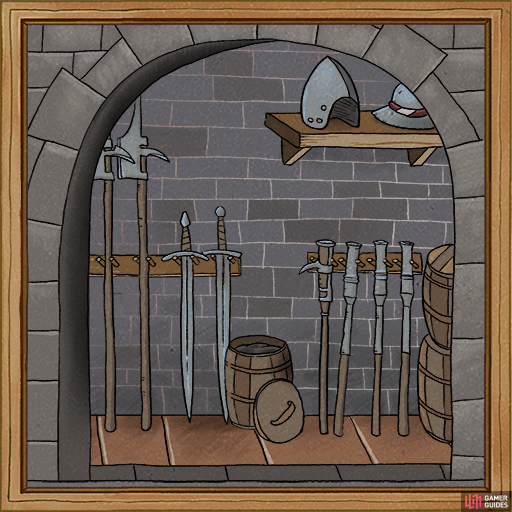
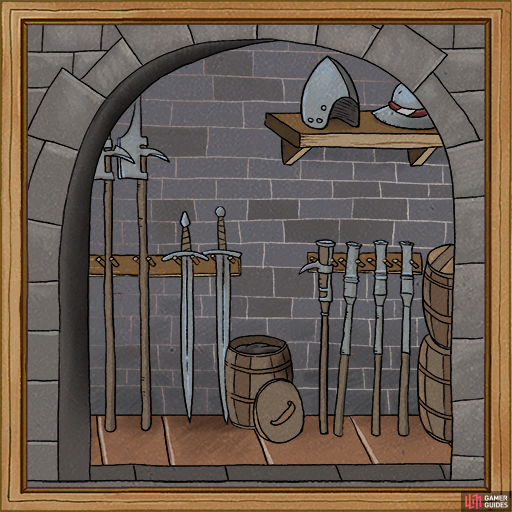
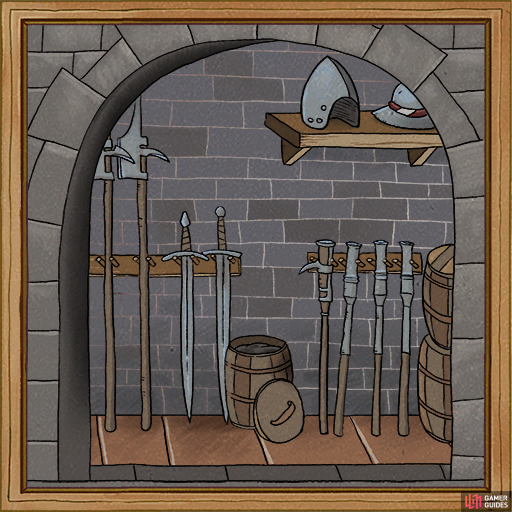
The armament of the military garrison or the state armoury of a town’s militia: swords, spears, halberds, bows and arrows, crossbows, armour, helmets and other offensive and defensive weapons including firearms. In times of danger it was the duty of all townspeople to join the defence of the town and for this purpose the town had an armoury with weapons for the inhabitants. Even in times of peace, townspeople were often required to take turns on guard duty.
European medieval armies were based on the feudal obligation of nobles to serve their liege lord. This system, which originated from late Roman traditions, primarily applied to defensive warfare where there was no opportunity for plunder. If a ruler wanted to lead an offensive campaign, he had to not only promise his knights the prospect of loot but also pay them. In France and Italy, where wars were relatively frequent, mercenary armed bands (rutta, routes) known as free companies began to emerge. These companies fought for wages during wars but extorted protection money from peasants and robbed travellers during peacetime. In the 14th century, mercenary service became a profession for thousands of impoverished nobles. Among the largest groups were the French Bandes blanches, the English White Company, and the Italian Compagnia di San Giorgio. In Bohemia, there was the retinue surrounding Jan Sokol of Lamberk and Hynek I of Kunstadt.
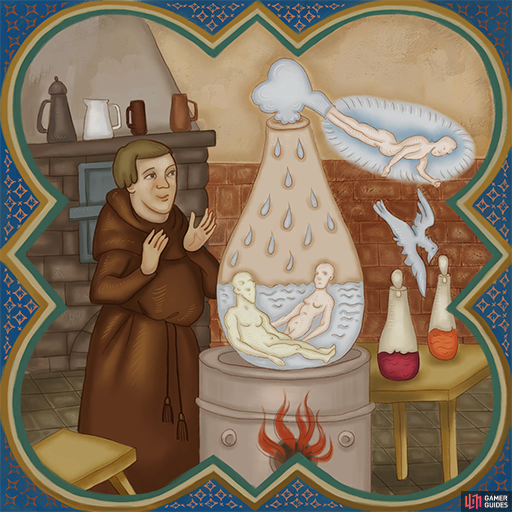
In the Middle Ages, alchemy and apothecary were naturally linked with astrology, which was regarded as applied astronomy. Since ancient times, fate had been considered the expression of divine will, emanating from the heavens and giving mankind signs in the constellations of stars and planets. Indeed, the Arabs and Ancient Greeks had made tables, overviews and catalogues of stars and constellations, as well as calendars used for navigation. The movement of celestial bodies had an influence on political issues, on decisions about war or marriage. Even medical treatment, food preparation or tasks associated with agriculture were deemed to be subject to celestial mechanics. Based on the constellations, every person was assigned a sign of the Zodiac, which determined his health, career and even social relationships throughout his life. Astrologers used many devices in their work, such as astrolabes, sextants, quadrants, sundials and other devices for accurate monitoring of the skies. Unlike today, astrology was a highly regarded and respected science and many astronomers of that time were also astrologers.
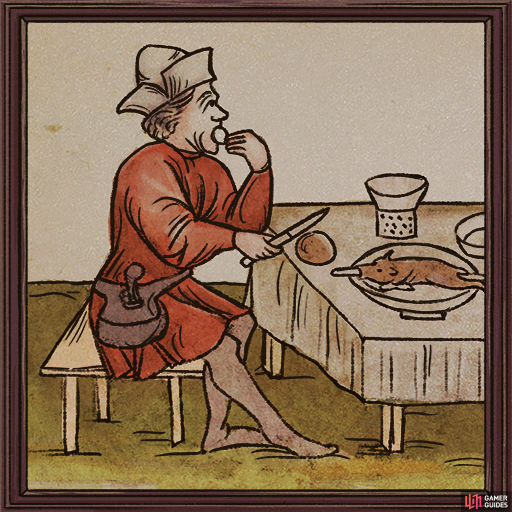
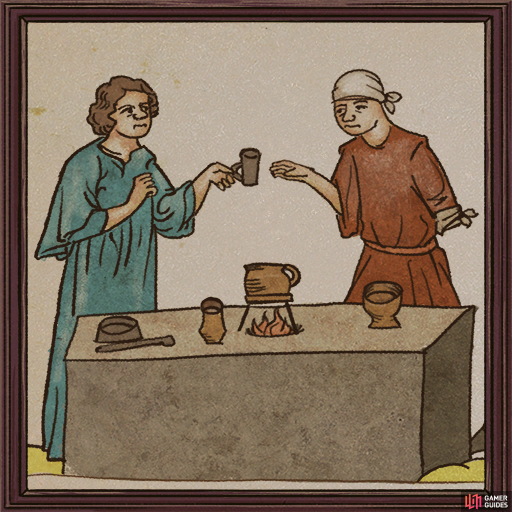
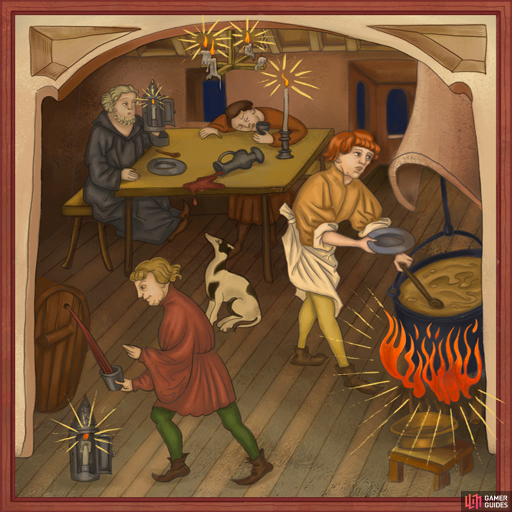
There were shortages of clean drinking water (due to pollution of watercourses by human activities around rural settlements) and fruit juices were available only in season. Hence everyone, including children, drank beer. The beer brewed at home was weaker and heavier than today, containing 1-5% alcohol, and was served in place of soup. It had no head of foam, was brewed from wheat - so-called white beer, or from barley old beer. Only in the 15th century, did hops come to be added for better beer quality, bringing out a bitter flavour. Wine was drunk primarily at the Court and in the monasteries. It differed from today’s wine with its spiced, very sweet taste. It was condensed into a thick syrup and diluted with water. Spirits were altogether rare. Distillation took place in small volumes. Fruit and cereal distillates were again weaker than today’s (about 15-20%). The most popular drink was mead, made from fermented honey dissolved in water.
The word bezoar originates from Persian and means protection against poison. Known as a bezoar stone, it is an animal formation created from indigestible food remnants and other materials in the stomach of herbivores or omnivores. Gradually accumulated and compressed residues form a ball the size of a pea or sometimes even an egg. The largest specimens have been found in the intestines of chamois, gazelles and camels. Since ancient times, it was believed that this formation possessed magical healing properties. It was used either ground into powder or soaked in liquid and was considered a powerful remedy against various poisons, nausea, pain, digestive disorders, epilepsy and even evil spirits. Thus, in the Middle Ages, bezoars attracted the attention of the wealthy and were often set into gold, richly decorated jewellery or other everyday objects.
Black books, also called pitch-books or blood-books, held information and records of delinquents and people suspected of capital crimes. The records were kept by the clerk of the municipal court of the interrogation of the prisoners, sometimes under torture. The oldest preserved black books date from the early 16th century.
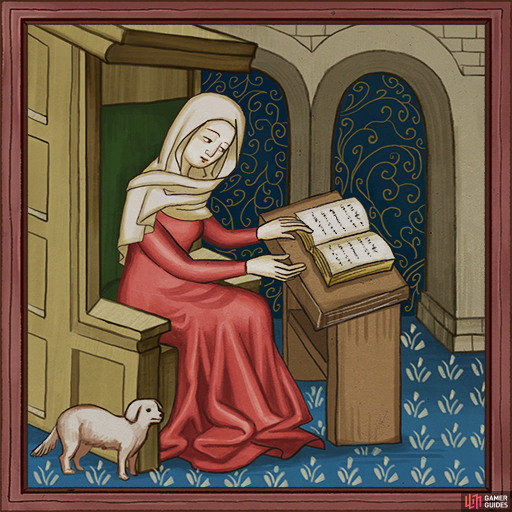
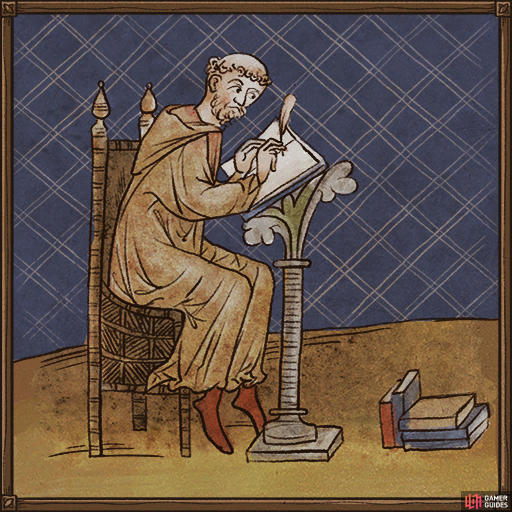
Collecting and preserving written records goes back to ancient times, but the barbarians who sacked Rome in the 5th century destroyed a great many, so a lot of rare manuscripts have only been preserved indirectly, via the Arab world. Various materials were used to write on: pieces of fabric, papyrus or parchment (fine animal leather). Parchment was expensive and was therefore used primarily for codices and deeds of privilege, due to its significantly longer lifespan. The most widely used material was paper. The writing implements used included the quill pen, engraver, brush or reed cane, charcoal and chalk sticks. The transcription of books was the monks’ domain. Each book was unique, carefully decorated, the text enriched with bounteous illuminations, all done by hand. The production of a book took many years, making them very expensive. Major works of that time came into being in Latin, but during the Middle Ages some literature began to appear in the respective national languages. Books were very heavy (therefore difficult to steal), and contained a great many pages. Although there were some miniature portable forms, there were also books so massive that they couldn’t be carried by one person. Not only because of their value, but also to protect them from damage, important writings were often kept in chests or cabinets. Later so-called chained libraries come into being, where the volumes would be tethered to the reading desk by a chain. Libraries were needed by administrative offices and places of learning, especially universities. The largest collections were to be found at the Sorbonne, Oxford and the University of Prague, where there were books donated by Emperor Charles IV himself. Notable members of the nobility or the Church also boasted private collections, despite the fact that not all of them could read.
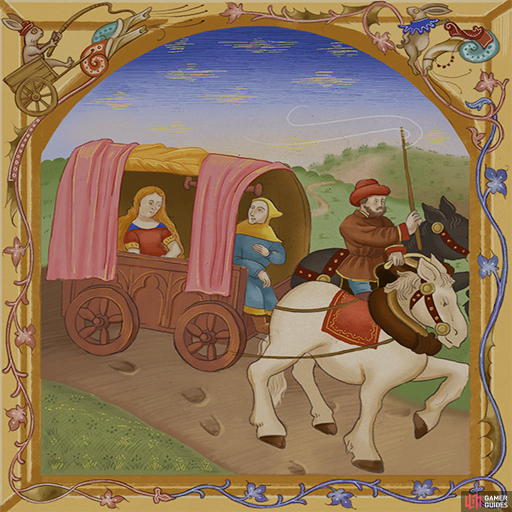
In the Middle Ages, carts served for travel, agricultural work, and military purposes. Among the simplest carts were two-wheeled carts, alongside ladder wagons (known as “ladder racks”) or carts with solid sides. The oldest carts with tall wheels had a single central axle connected to the chassis. From the 14th century, two-axle four-wheeled carts were used. The front axle was not steerable, resulting in a very small turning radius. These carts also lacked benches, so the coachman either rode on one of the horses or walked alongside the cart. In times of war, carts could be used as mobile field fortifications—a strategy notably highlighted during the Hussite Wars, where the strategic use of “wagon forts” won several battles for the Hussites.
The term charity was understood as benevolence to one’s brethren. Christian iconography depicts charity as a Pelican, feeding its young with its own flesh. Society, inspired by the teaching of the Church and Old Testament stories, showed compassion by giving alms, free medical aid, food and wine to the poor or travellers, sometimes even to the exiled. It was deemed that such acts of mercy secured salvation and a place in Heaven, and were more about formally securing indulgences, rather than being spontaneous. The Church often established hospitals, hostels, hospices, but also granted pardons to prisoners, and the poor were allowed to beg in front of the church and visit the baths at least twice a year at the expense of the town.
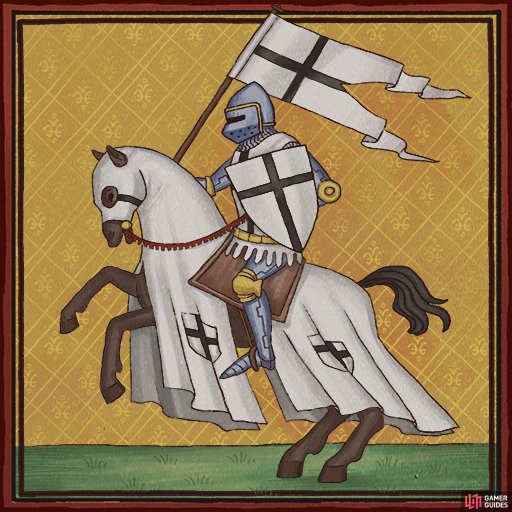
The first knightly orders emerged at the end of the 11th century, primarily in connection with the Crusades. They were a combination of religious order and military organization, appealing to Christian values as well as chivalric traditions and service to society. Besides noble knights, the members of the order also included a large number of common people: foot soldiers, archers, sailors, and auxiliary military professions. Becoming a member of a knightly order might have seemed like a suitable career choice for a young medieval man, but often the opposite was true. Life was subject to strict rules and organization, often requiring celibacy, life in a closed convent, or long fasts. For example, the Templars forbade paying ransom for their members, so falling into enemy hands meant only imprisonment or death. In the High Middle Ages of the 13th and 14th centuries, the orders experienced their greatest expansion, with their armies numbering tens of thousands of fighters, and in some cases, they even founded their own states (such as in the Baltic region or later in Malta). In more recent history, their religious and ecclesiastical context has faded, and the orders have focused more on charity. The most famous knightly order is the Templars, followed by the Order of St. John (Order of the Knights of Malta), the Teutonic Order, the Knights of the Holy Sepulchre, and the Knights of St. Lazarus.
Since ancient times, educated members of the court or clergy dedicated themselves to writing chronicles, i.e. literary works describing contemporary events, the lives of rulers, great battles, and sometimes everyday life.. These records were kept chronologically and, beyond the mere dates, they provide a rich source of period information. Chronicles are one of the best sources for studying and reconstructing the history of a country, notable figures, places, buildings, and general realities of the time. There are different types of chronicles: world, national, episcopal, monastic, royal, dynastic, provincial (tracking genealogy), urban, biographical or autobiographical, travel journals and more. Among the most significant Czech chronicles are those of Cosmas and Dalimil, the Canon of Vyšehrad, the writings of the Sasau Monk and the Zbraslav Chronicle. The chroniclers generally enjoyed the most favourable conditions – most lived at courts, had free access to older written records and court life, and ample time devoted solely to writing. Although chronicles are the most valuable historic sources, it is important to consider their historical ideological subtext when reading and reconstructing them: for example, Cosmas wrote his chronicle with unabashed sympathy for the Přemyslid dynasty, while Dalimil showed great antipathy against the Germans. Both occasionally mixed facts with myths and legends (e.g. the beginning of Czech history with the building of the Tower of Babel). Some of the books to be found in the game are a transliterations of chapters from Cosmas or Dalimil - e.g. the account of forefather Čech, the Maidens’ War and others.
The church was not just a place of worship, but also an important communication center in medieval society. Its basic areas included the nave or naves (main and side) and the presbytery, also known as the sanctuary. This housed the main altar, where Mass was celebrated. Most churches were oriented with the sanctuary on the eastern side. The baptismal font was placed near the main entrance. Another important feature was the pulpit, from which the priest addressed the people. Unlike today, sermons were conducted separately from the Mass. During the church service, the priest faced away from the people and, according to the Pope’s decree, Mass was conducted in Latin, which no one understood. This was compensated by rich visual decorations on the church walls, which aimed to explain the mysteries of the liturgy and especially biblical scenes to ordinary illiterate people. After the church service, the church space was used, for example, as a temporary storage for grain and other traded goods, or as a gathering place for the community to discuss important matters.
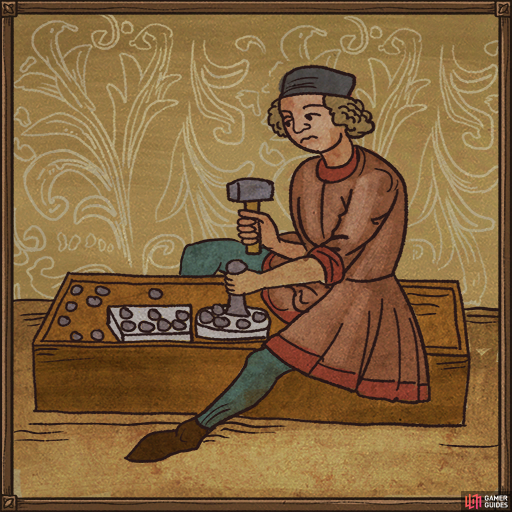
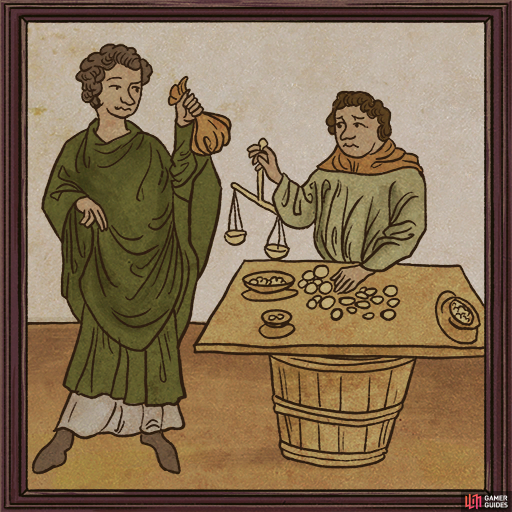
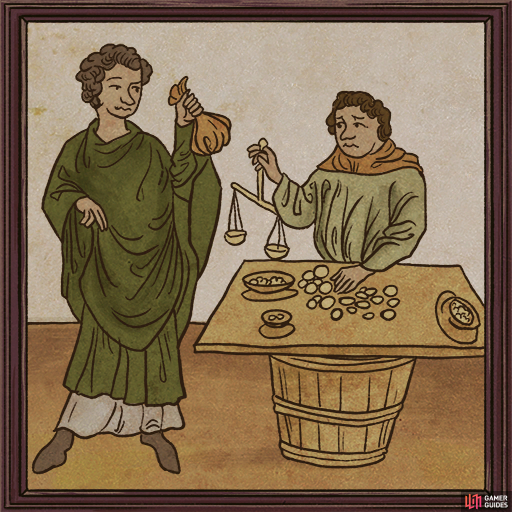
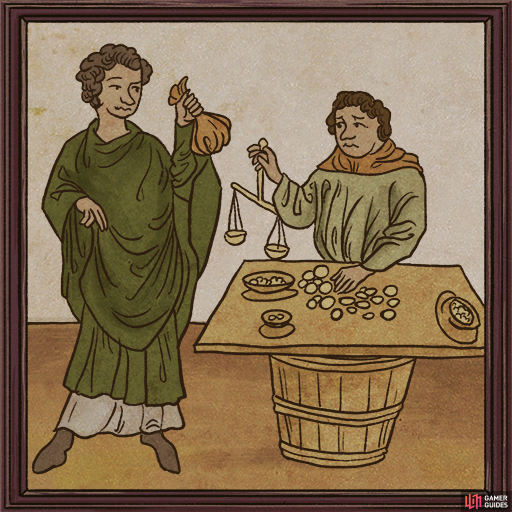
Manual coin minting was a complex process in the Middle Ages. After the raw silver was mined and processed, ingots, known ascans, were made from the precious metal alloy. The ingots were then hammered into thin, narrow strips by the minters, from which squares, so-called farfule, were cut with large shears and then rounded. The slices were then hammered into a circular shape on the anvil and then smoothed by a process known as clipping. Only then could the coiner, known as a pregéř, step in to insert the coin between two dies at the minting tables and strike it with a hammer. Since great strength was required, the coiner had to be a mountain of a man: one hand was needed to hold the two stamps together, the other to pound them with a heavy hammer. Later on, when thalers replaced Prague groschen, two people were needed for minting. The activity was very noisy and had to be well-guarded. Most engravers eventually became partially deaf and were not allowed to wear clothing with loose folds or pockets, which could be used to conceal something. Imperfect coins were collected and subsequently melted down to be reminted.
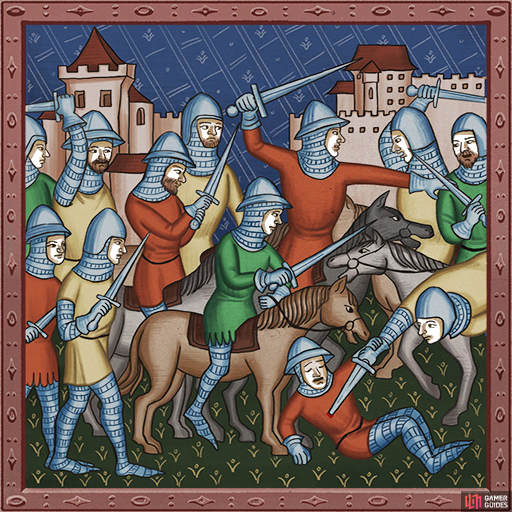
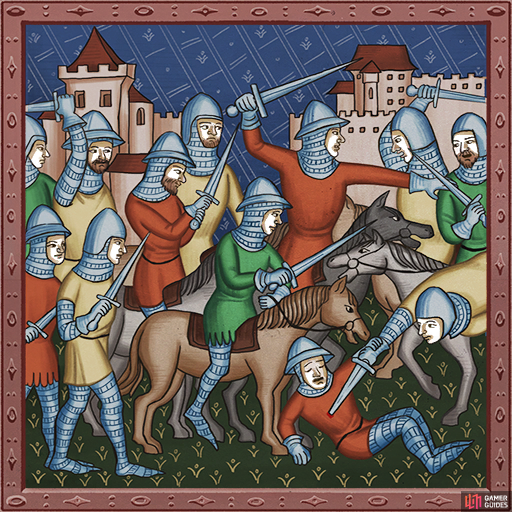
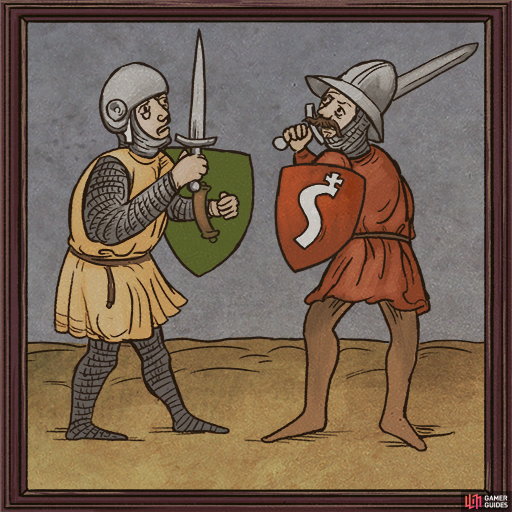
In the High Middle Ages, new elements of combat techniques and weapons and armour emerged. Curved sabres became popular, and chainmail was replaced by plate armour. Knights preferred heavier swords, crossbows, and impact weapons such as maces and flails. Only wealthy nobles could afford full armour. Usually, only partial metal armour was worn, and more than for protection, the focus was on combat technique. For this reason, swordfighting developed in two ways: a) knightly swordsmanship – fighting with a spear, sword, and shield in full heavy armour b) common swordsmanship – for lightly armoured fighters who fought with swords and common weapons such as falchions, flails, scythes, staffs, etc. In battles between lightly armoured and heavily armoured fighters, speed, agility, and cleverness often won. Therefore, swordplay also interested the poorer parts of society. They gradually started to be educated in swordfighting schools. The training was not very professional, being based more on dexterity, readiness, and the use of various available means besides weapons. Precise contemporary descriptions of duels are lacking, so historians rely on mentions in literature or preserved visual material.
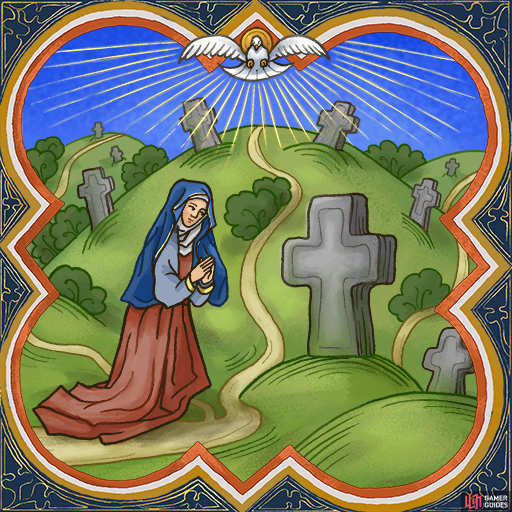
Conciliation crosses, or simply stones with a cross carved into their surface, were erected at places where tragic events often occurred or at significant milestones in the history of a village or country, and were closely related to criminal law. They were meant to be a symbol of confession of guilt and a plea for forgiveness. A conciliation cross was an act of penance for a committed crime, constructed by the repentant offender at their own expense. Additionally, conciliation crosses marked the boundaries of estates and villages.
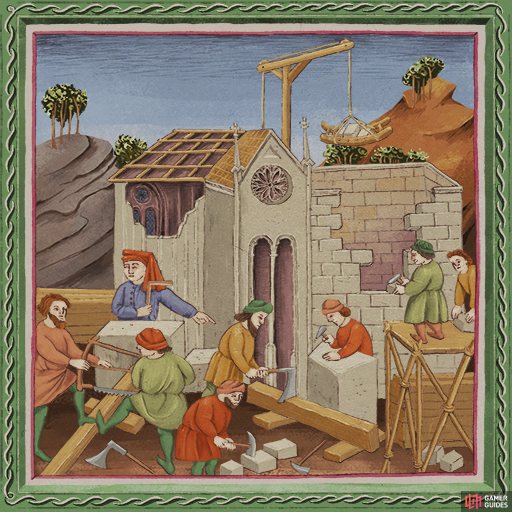
Workshops sprang up around every major construction site and employed stonemasons, stonedressers, carpenters, blacksmiths, carters, rope makers, sawyers, coopers and the like. Unskilled work was done by day labourers. Stone or wooden elements and auxiliary structures were manufactured directly at the works on site, known as the construction yard. The craftsmen often used specialised tools such as wooden hoists, winches, pulleys and rotating cranes, powered by hand or by large tread wheels. Quite a number of people worked in construction, among whom natural and informal bonds were formed. The workshop also provided plenty of customers for the surrounding vendors, innkeepers and merchants, and most of the employees stayed overnight in the area. The workshop was run by a master builder who allocated tasks, managed the building process and dealt with the patron (sponsor) of the building.
At the turn of the 14th century, when the quality of Czech currency deteriorated due to the replacement of silver with cheaper metals, counterfeiting also improved. This happened despite strict prosecutions and the death penalties that were imposed for such offenses. One example of such counterfeiting included lead coins plated with silver. The authenticity could be detected by biting the coin (lead is soft, while silver is not). Counterfeiters’ workshops were often hidden in karst and sandstone caves and equipped with small laboratories, as silvering the metal was a chemical process requiring special tools.
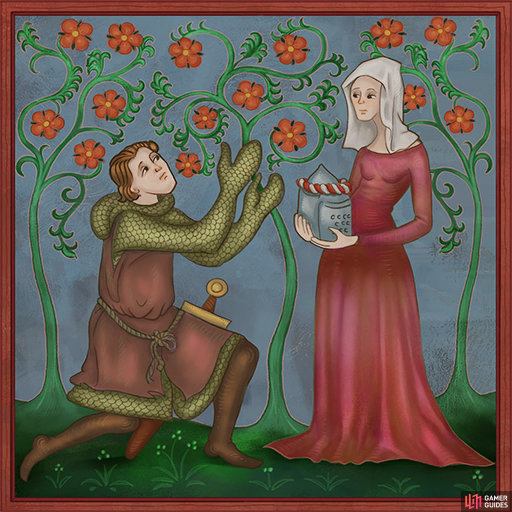
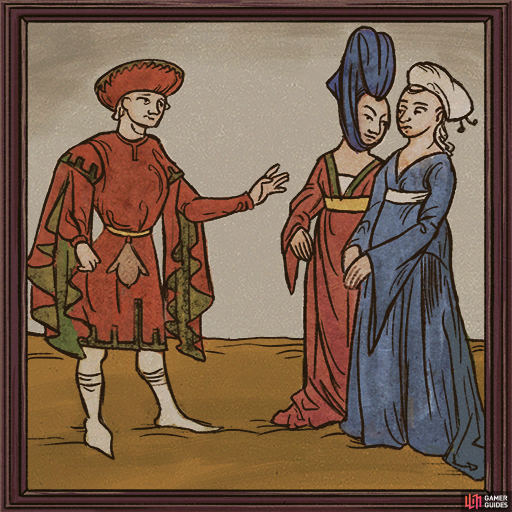
Courtliness or courtesy stand for courtly etiquette. The cradle of courtesy was France, and later England, which shaped the patterns of beauty, education, diplomacy and the arts. The origins of courtesy are considered to be the chivalry of a knight toward his Lady: adoration, versifying, greetings, gestures and obedience. Not overlooked were rules for conduct during feasts, stylized movement (e.g. mounting a horse or sitting down at table), as well as protecting ladies and the weak, or the manner of divulging one’s own feelings and emotions. Important elements in this were language, the playing of musical instruments and dance. Many considered courtesy to be effete, but despite this, for quite a long time it dominated high society’s approach to manners and the arts.
Damascus steel, also known as damask, damascene, or damask steel, is a high-quality metal alloy produced since the early Middle Ages in Syria, Indonesia, and Central Asia. It was imported into Europe from the Syrian city of Damascus and was used by the Franks, Vikings, and Spaniards. However, this steel was not accessible to everyone, as its price was very high. Damascus steel is renowned for its distinctive composition and processing, which creates alternating layers of metal. Each item thus acquired characteristic patterns, known as marbling, which are entirely unique. This unique composition gave the steel exceptional properties, particularly very high hardness and durability compared to ordinary steel. For this reason, the complex and costly production of this steel was strictly guarded as a secret. Some, of course, attempted to replicate it, creating so-called welded (false) Damascus from lower-quality materials, which resembled the real thing in appearance but was nowhere near its equal in terms of properties.
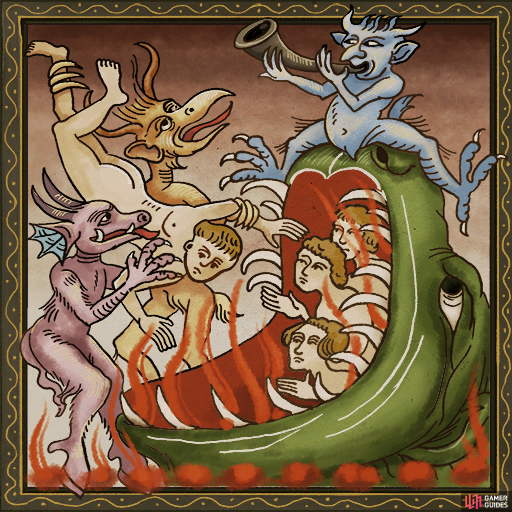
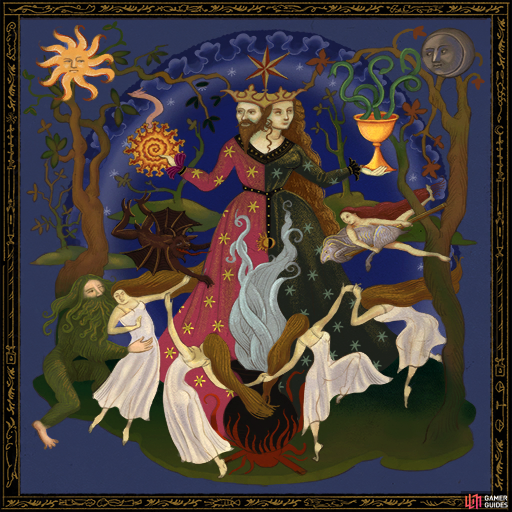
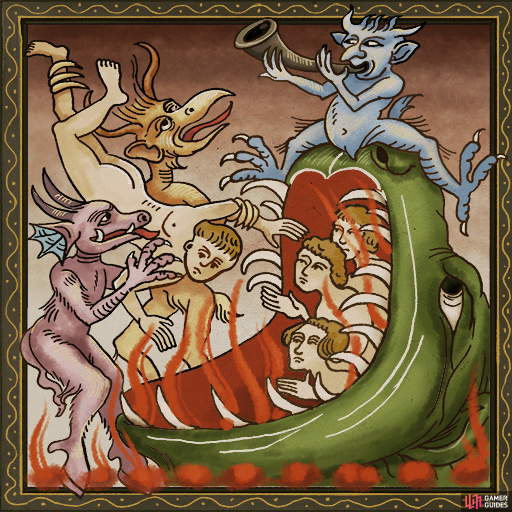
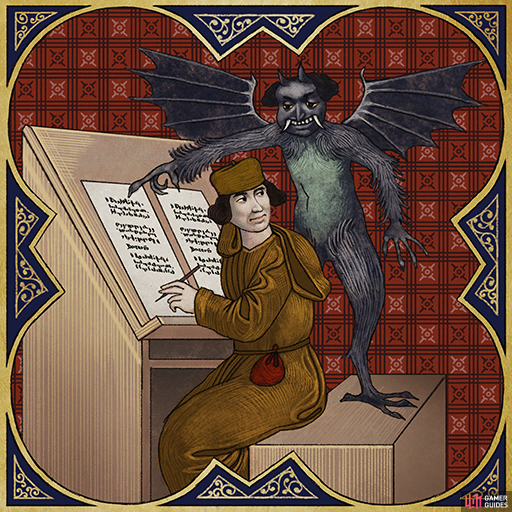
Demons (Chorts) are mythical and fairy-tale inhabitants of hell specific to Slavic cultural context. While in the rest of Europe people refer to demonic creatures as devils and attribute purely negative intentions to them, in Czech folklore we lean towards the image of demons as mischievous, malicious, and often foolish beings depicted with goat horns, a tail, and hooves on their feet, subservient to the will of the ruler of hell, Lucifer. Medieval magical thinking attributed various qualities to demons. Many a castle had a notorious gate to hell in its basement, many a mill or abandoned building served as their abode. Demons smelled bad, caused disturbances, and were blamed for hens not laying eggs, milk souring, and food spoiling. While the church refuted other originally pagan beliefs, it assimilated demons for its purposes, portraying them as tempters and punishment for believers who weren’t devout.
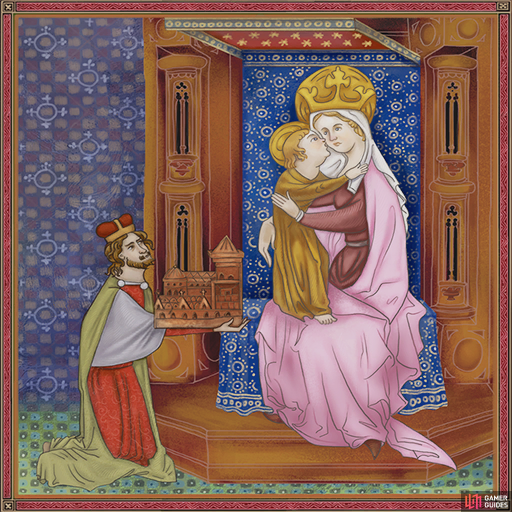
In today’s language, a sponsor. It referred to a wealthy nobleman or burgher who expended resources on the construction or acquisition of some material estate, and then, together with a deed of gift, donated it to someone else. In the context of the Middle Ages, we are mainly talking about church patrons. Through donations, most monasteries were built, or for example, the Church of St. Barbara in Kuttenberg, where altars were dedicated to the most generous patrons. Being a patron was a matter of both prestige and faith: whoever sponsored the church had a prepaid place in the kingdom of heaven. By making a donation, a wealthy sponsor committed not only to the purchase or construction itself but also to the subsequent maintenance and operation.
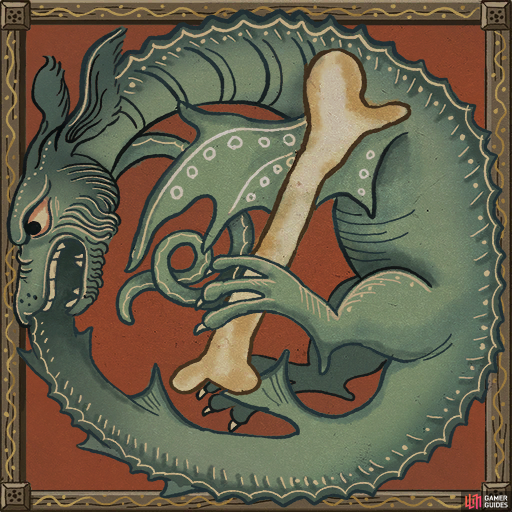
Knowledge of paleontology and the early periods of life on our planet was not exactly the forte of medieval education, much less of illiterate commoners. According to the Bible, the world was created in seven days which simply left no room for the epochs of prehistory. Therefore, even the occasional rare finds of fossil remains of prehistoric life were attributed more to mythical creatures: dragons, basilisks, griffins and wyverns. Several references to the discovery of dragon bonessurvive from the Middle Ages. Sometimes they were the remains of real dinosaurs, sometimes they were imported bones of exotic animals unfamiliar to people in this region. Crocodiles were particularly popular at the time because of their appearance, and one of them even entered the iconography as the dragon that St. George was said to have fought.
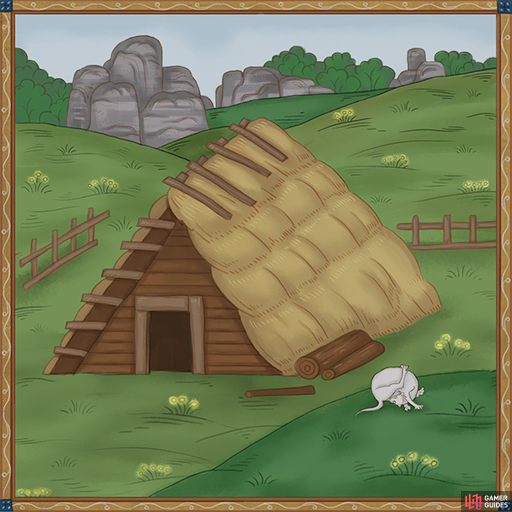
A dugout shelter is a form of smaller and more makeshift housing, one room dug into the ground with steps leading down into it. It was covered with a simple thatched roof. These were home to poor people, or a provisional shelter for woodcutters, charcoal burners and shepherds, who did not live in them all year round.
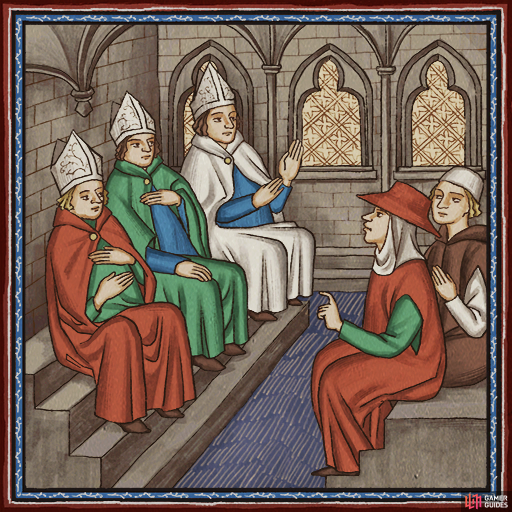
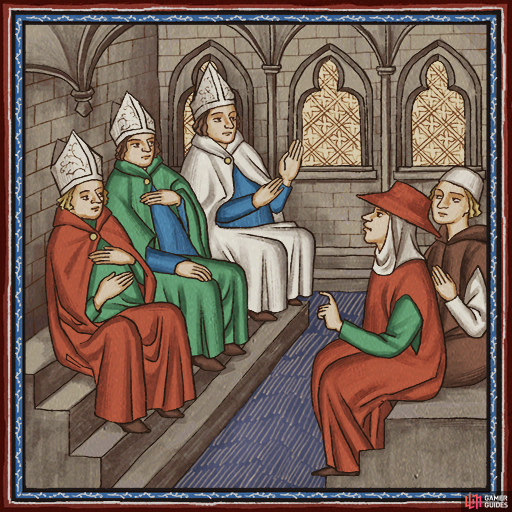
Ecuminical councils were gatherings of church representatives who negotiated and discussed matters of faith and addressed church governance. For example, the great Council of Constance (1414-1418) lasted four years and addressed issues of reformation and the papal schism.
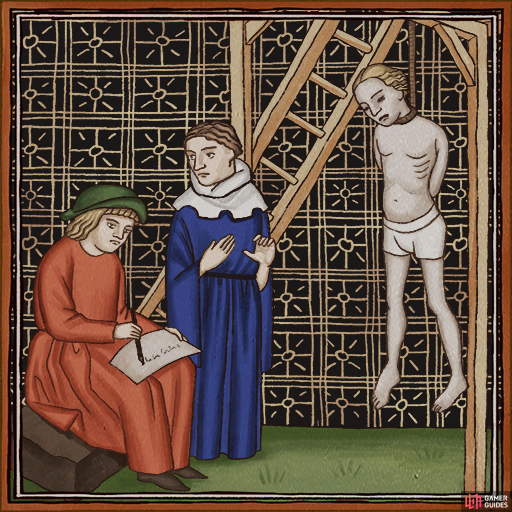
Execution sites were located on hills, crossroads, and outside the city, as they were considered unclean places. These were desolate locations that everyone avoided; no craftsman wanted to work there for fear of losing their honour. The only person who frequently moved nearby was the executioner, who often lived close to the execution site. Ordinary people visited the execution site only for one purpose: when an execution was taking place. Executions were a popular public spectacle, often attracting the entire town. Capital punishment could only be carried out by certain towns, and not all of them had an executioner.
Both plant and animal fibres were used to make textiles. In the beginning, mainly bast fibres (willow, linden) and various grasses were used. Later, plants particularly suitable for textile production, such as flax and hemp, were also bred. Hemp fibre is strong, coarse and darker than flax, but not flexible, making it less suitable for clothing and instead was used more for ropes and cordage. Cotton was unknown in Europe until the late Middle Ages. The most common animal raw material was wool, which has good thermal insulation properties, high absorbency, elasticity and dyes well. It was combed or sheared from sheep. Silk was imported from Asia as a rare and luxurious commodity.
Palné zbraně se poprvé objevují v Evropě ve 14. století a hojně se začínají používat již na začátku 15. století.
V českém království se staly klíčové během husitských válek. Zajímavé je, že právě husité ovlivnili pojmenování prvních palných zbraní, které se rozšířilo do celého světa. Příkladem je anglické slovo pistol pro nejlehčí ruční zbraň, které pochází právě z české píšťaly. Tato zbraň měla poměrně krátkou kovanou hlaveň s tulejí, osazenou v dřevěném stvolu, aby ji střelec mohl držet v podpaží. Jako projektily sloužily celistvé kule, kartáčové střely anebo speciálně tvarované kule, které při letu hvízdaly a plašily koně. Střelný prach se sypal do hlavně, kde se poté utěsnil ucpávkou a projektilem a zadusal nabijákem. Odpaloval se skrze dírku v hlavni za pomocí doutnáku nebo rozžhaveného kusu železa. První palné zbraně byly značně nepřesné a s malým dostřelem, sotva pár desítek metrů, ale i na tuto vzdálenost dokázaly prorazit i pevnou zbroj. Jinou populární ruční palnou zbraní ve střední Evropě byla hákovnice. Měla ocelovou nebo bronzovou hlaveň o průměrné ráži 20 až 30 mm, která podobně jako píšťala byla zasazena v dřevěné pažbě. Při ústí hlavně byl umístěn hák, který umožňoval zbraň při střelbě zaklesnout za hradbu, taras nebo okraj bojového vozu, což zásadně tlumilo její velký zpětný ráz. Při dobývání měst nebo tvrzí se používaly mnohem větší a těžší palné zbraně – tarasnice, houfnice a děla.
In the medieval period, forging various documents was quite common. Few people were literate, so it was difficult for many to assess the authenticity of any given record. High-ranking lords often could not read and dictated documents to scribes – trust in the written word was therefore low, with an expectation that correspondence could be falsified. More reliance was placed on spoken word, promises, and the honor of the other person.
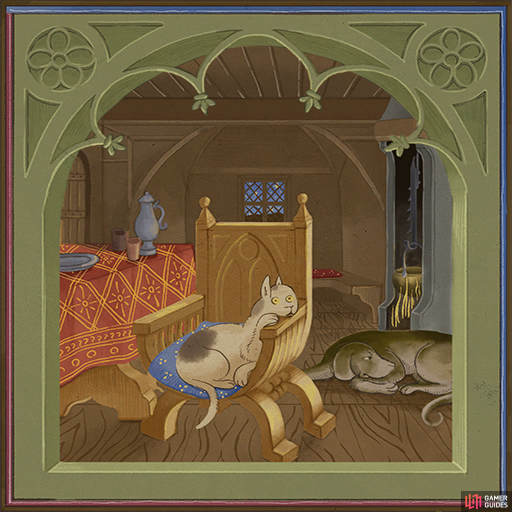
By the end of the 15th century, Bohemian furniture was made from planks with more or less complex construction. Oak, fir, walnut, linden, ash, larch, or spruce were used. The surface was coated with beeswax or linseed oil. Towards the end of the Gothic period, shellac polish was used. Colouring was done by smoking, water from fermented cabbage, and bleaching with lime water. Tables and seating furniture had the same construction with flat sides or boards in the shape of an “X”. Chests varied in size and were used to store bulk materials, clothing, or other small possessions. City dwellers slept in beds with curtains, while in the countryside, the furnishings were very simple. Peasants made furniture from split and cleaned planks and posts. In a peasant’s hut, people slept on hay laid on the ground (a straw mattress). Cabinetmakers and carvers decorated the furniture with ornaments. The most expensive furniture was adorned with metal elements, which not only enhanced its appearance but also served a reinforcing function. In KCD, most of the furniture is made according to medieval examples from the 12th to 16th centuries.
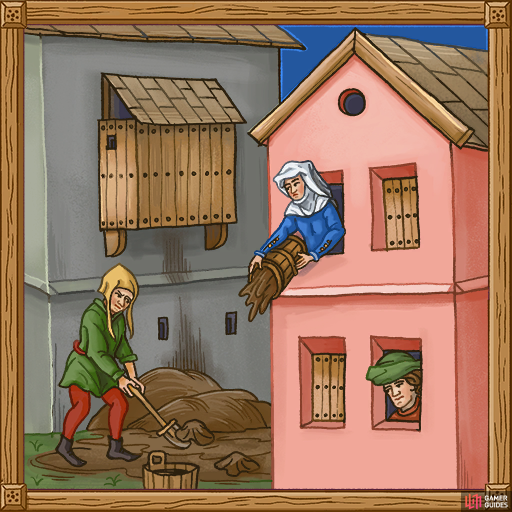
It’s well known that medieval Europe was not particularly hygienic. Most household waste ended up just a few meters from the house. There wasn’t as much waste as today, and most of it (if not all) was organic in nature. People were frugal and true masters at using everything down to the last piece. Food preparation scraps were minimal, and the same was true for processing animal products. Old clothes were remade, old dishes repaired, and furniture lasted for generations. Consequently, the most waste produced by people came from their own digestion. This waste ended up, at best, in compost, which over time became good, quality soil (though the compost heap itself was right behind the house), or in a cesspit, and at worst, in the river or on the street, where it contributed to the iconic mud. Since wells were directly beneath urban houses, or water was taken from the river for drinking, epidemics of typhoid, cholera, and hepatitis were common. Other waste, which we haven’t yet mentioned, ended up just outside the city walls or, in the case of villages or artisanal production, behind the nearest embankment. Not infrequently, the ditches along the walls were more like bottomless rubbish dumps.
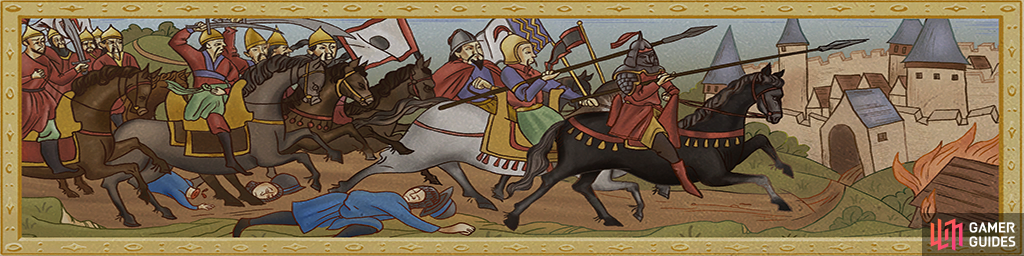
Also known as the Great State or the Ulus of Jochi, it was a large Mongol-Tatar state entity extending across Eastern Europe and Siberia. It was originally formed as part of the Mongol Empire, became a fully independent state in 1260, and later embraced Islam. Until the mid-14th century, it was the largest and militarily strongest state in all of Eastern Europe, occupying much of what is now Ukraine and Russia, with unimaginable profits from the taxes levied on its conquered territories. However, as a result of internal divisions and waning momentum, the khanate’s power gradually began to decline, until in 1380, at the First Battle of Kulikovo, the horde was significantly defeated by the Russian princes for the first time. The core of the Mongol-Tatar army was light cavalry with bows and arrows, whose mobility and ‘hit-and-run’ capability was unmatched by the slow moving heavily armoured armies of the time. The main strategy of advancing hordes was ruthless pillaging and scorched earth tactics, aimed at deterring subjected lands from attempting resistance. We write about the horde in particular because it was the basis of Cuman ethnicity and warfare, and because it strongly shaped the migration and warfare of the time.
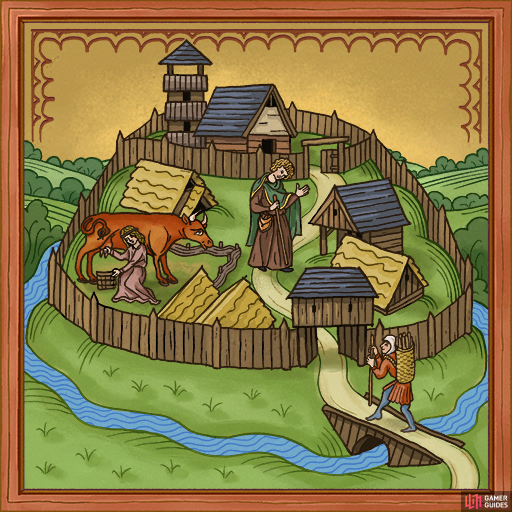
Gords or hillforts, sometimes called Burgwalls, were fortified settlements of various sizes, established from the Neolithic period right through to the early Middle Ages. They were built using natural terrain or the protection of waterways, on islands or hills. Within the outer walls there would typically be a central fort. These strongholds were mostly built from timber, with an outer palisade (stockade) and ditch or moat. The stronghold fulfilled a protective and strategic function in times of war and also served as a stopover on trade routes or as goods transfer stations. Semine hillfort Not far from the Semine fortress is the largest documented Celtic gord in the Czech lands. The hardly accessible site, in the middle of forests and rocks, above the confluence of rivers, ideally fulfilled the conditions for a strategic settlement. The Celts probably built an oppidium here - an early Medieval form of fortified settlement - or a refugium - a temporary refuge during wars. According to research, the fortress had three ramparts and moats in addition to natural fortifications. Inside, pottery from the La Tène period and remains of masonry made of black basalt, which was also used at Trosky Castle, were found. This suggests that the hillfort may have even been surrounded by a stone wall. According to some hypotheses, the Celts also had a sacred place here, as during the solar equinox, the sunset can be seen from the top of Semine hill between the rocks on which Trosky Castle stands. Since 2018, a reconstruction of the hillfort has been standing on the site, where it is possible to learn about the history of Bohemian Paradise.
Early Gothic buildings in Bohemia were inspired by France and the Rhineland. Among the earliest were the monastery in Předklášteří near Tišnov, South Moravia, the chapter house in Osek, North Bohemia, the monastery of St Agnes in Prague and many parish churches and monasteries such as those in Kolin and Kouřim in Central Bohemia. At the turn of the 13th and 14th centuries, Czech architecture diverged from its western counterparts. There was a burgeoning of Cistercian monasteries, e.g. in Zlatá Koruna and Vyšší Brod in South Bohemia, and churches and castles, e.g. Bezděz, North Bohemia. The High Gothic period was ushered in during the time of Charles IV and Wenceslas IV, with its rectangular windows and portals, rayonnant traceries and quadripartite, sexpartite, or cross-ribbed vaulting. The most significant buildings of that time include Charles University, St Vitus Cathedral, Charles Bridge, Prague Old Town Hall and New Town Hall, stone houses in Prague and the castles of Karlštejn, Kost and Kašperk. Records of construction work fellowships first appear during this time: the most famous are those of Master Peter Parler and his family, and Matthias of Arras, who also worked on the reconstruction of Sasau Monastery. New castles no longer served just a defensive function, but were also intended to serve as royal residences. They were therefore more spacious and elaborate and had extensive gardens.
Black powder is the oldest known explosive, discovered around the 9th century in China. Initially, it was used in medicine and widely experimented with by alchemists. However, when it failed to yield the anticipated elixir of immortality, its powerful explosive properties began to be used for ammunition production. It likely arrived in Europe as early as the 13th century, although some experts believe that Europeans discovered black powder independently of China. The European inventor of gunpowder is typically attributed to either the English monk and scientist Berthold Schwarz, or, according to other sources, the German monk Albert the Great, who was familiar with the recipe for gunpowder as early as 1275. Another mention can be found with the alchemist Marcus Graecus, who included a black powder recipe in his collection around 1300. However, at this time, gunpowder was not yet commonly used in combat. Originally, a fine particle mixture known as “meal powder,” produced by grinding the individual components, was used for shooting. Later, methods were developed to produce larger grains, which significantly improved the consistency of ballistic properties and accuracy in shooting.
Herbs played an important role not only in medieval cuisine but also formed the basis of herbal medicine. Knowledge about them spread either through oral tradition (herbalists in rural areas) or among monks and scholars from ancient texts. Many herbs could be administered as teas, decoctions (long cooking), infusions (steeping in hot water), extracts (cold maceration), tinctures (soaking in alcohol), steeped in vinegar, juice, or concentrates for gargling. Adding honey or sugar did not enhance the effectiveness of herbal products but improved their taste. In addition to internal use, herbs were applied in the form of creams, ointments, compresses, or oils, dissolved in water. Sometimes it was recommended to sleep on pillows filled with dried plants. It was believed (especially in rural areas) that the properties of herbs were influenced by the time and occasion of their harvesting (e.g., on Midsummer’s Eve, at midnight, etc.) and the use of special incantations.
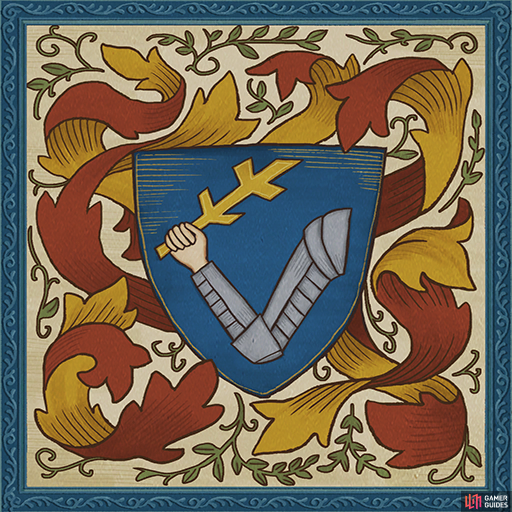
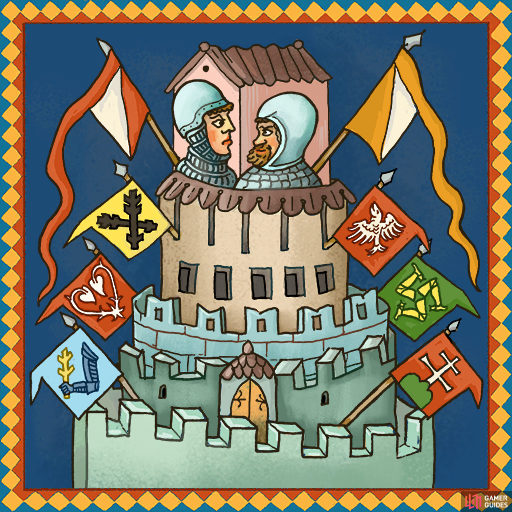
Heraldry is the doctrine of characters and symbols depicted on coats of arms, governed by fixed rules, and the relevant know-how was privy to nobles and knights. It was a necessity, because Europe of that time had so many noble families, they simply could not be memorized. By applying heraldic symbolism and rules, however, the wearer and his dynasty could be identified from his battle pennants and coat of arms. Simplified heraldic symbolism was also used on the arms and equipment of urban militias and the attire of soldiers of a feudal lord.
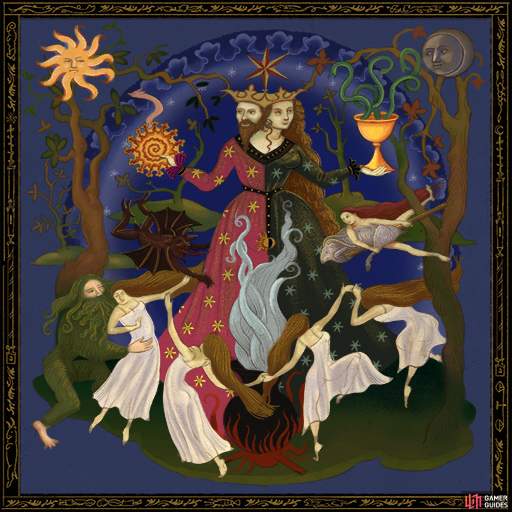
The Leshy, also known as Heykal or simply the Wild Man of the Woods, is a forest demon according to Czech mythology. His appearance is similar to the East Slavic Leshy, but also to the classical fauns and satyrs or the Western European tradition. He has no soul and lives apart from human society – deep in forests, caves or rocks. His body is covered in fur or moss, sometimes only sparsely clothed, and he got the name Heykal from his terrifying call (Czech hýkat means “to bray”). This sound must not be imitated by humans; otherwise, the Leshy will pursue them, jump on their back and chase them through the forest, or tear them apart. It is said that the most dangerous demons were found in the Plzeň region. People believed that the wild men would capture young girls and take them as wives, and if a girl escaped, they would tear her child apart. Leshies also enjoyed frightening travellers and leading them astray. Protection against them could be achieved by swithing over one’s shoes, turning pockets inside out or carrying a piece of bread. The female counterparts of the Leshy are Divozhenkas, Forest Maidens or Fairies.
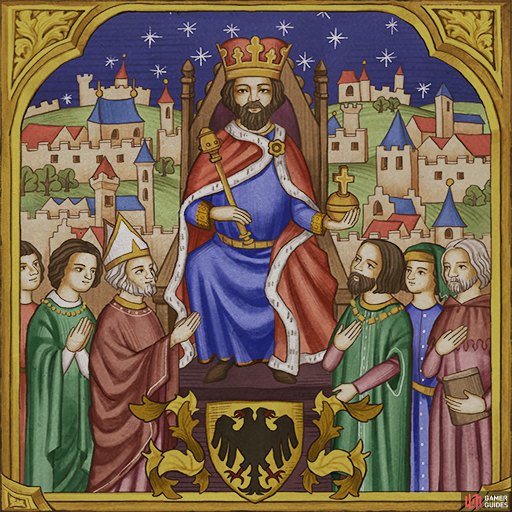
Not only a geographical area of countries following the glory of Rome after its collapse, but also a socio-political power formation with a great symbolic value. It was not a unified state, but a very loose union of many different states. Officially, the empire functioned from 962 until 1806, its size and member states changing frequently. The emperors of the Holy Roman Empire were elected by the so-called prince-electors until the 15th century, when the Habsburg dynasty claimed the imperial throne hereditarily. The coronation of an emperor was accompanied by many political struggles, especially on the part of the Church, which claimed the so-called investiture for itself and wanted to be indispensable in this activity. Thus, each emperor had to accept his title from the hands of the Pope. The Bohemian Principality became part of the Empire in the early 11th century, but thanks to Přemysl Otakar I., the Bohemian lands had a special status within the confederation: the Bohemian monarch was exempt from all obligations to the Holy Roman Empire, except for participation in the councils. The first Bohemian monarch to sit on the imperial throne was Charles IV.
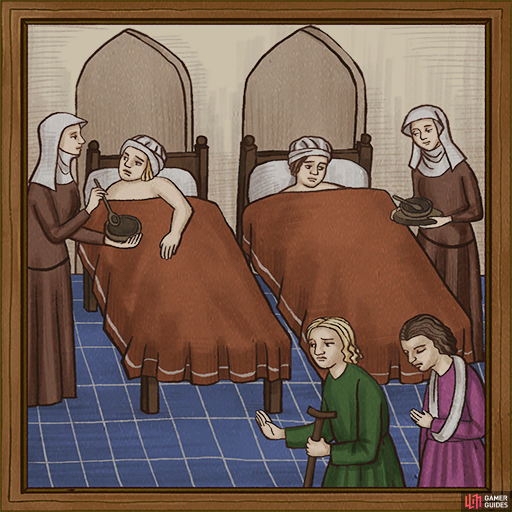
Since ancient times, people have been educated in medicine and have tried to help others in the fight against illness and pain. The oldest texts of medical practices have been preserved in monasteries, which were the first centres of medieval medicine. Medicine was primarily practised by Benedictines. Unlike city doctors, they did not charge money for their care. In the 11th century, hospitals experienced significant development, mainly thanks to knightly orders dedicated to charity, and the construction of hospitals or shelters for travellers. Care for the sick was entrusted exclusively to men; women and nuns were forbidden to assist in hospitals by the Church Council. Treatment of wounds was most often carried out by disinfecting with hot iron, water, or applying various ointments or balms to the wound. Bandaging was done with cloth or linen. Herbs were applied to open wounds and inflammations. Soldiers often had to be able to help themselves because field hospitals could not move quickly enough with the military camp. The wounded often did not survive the several-day journey in an open cart.
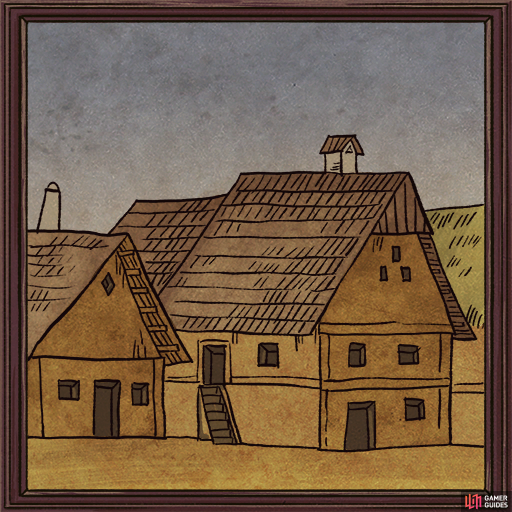
The core of a late medieval house in both village and town consisted of a kitchen, a hall, and a living chamber (hearth room, parlour). Everything was located on the ground floor. From the 15th century, additional floors were built, and the first multi-story houses appeared. The walls were insulated from the outside with a clay mixture, which also protected the house from fire. Windows were made very small or omitted altogether to retain heat. The property was usually fenced, with a gate wide enough for a cart to enter the courtyard. Attached to the house were outbuildings: stables, barns, outhouses, ovens, and shelters for wood or food storage. Waste was taken outside the house, to the fields, or to dug-out cesspits. Toilets were built over these cesspits in front of the house. A typical single-story, three-section village house had entrance doors from the courtyard leading into the central room, from which there were doors to the living room and the chamber. The houses were made of wood on stone foundations. The hearth room, the main area of a village household, served for living and as a kitchen, containing an oven and a hearth. Above the hearth was a chimney leading to the attic. Other areas were used for storing grains, tools, food in containers or chests, and so on. Torches, ceramic lamps, and mainly the fire from the hearth provided lighting. The floor was made of compacted clay, often mixed with straw, leaves, or animal hair. The roof was typically covered with thatch (bundles of rye straw or reeds, often double-layered). In front of the house was a garden and a yard with outbuildings, where poultry, pigs, and cattle were kept.
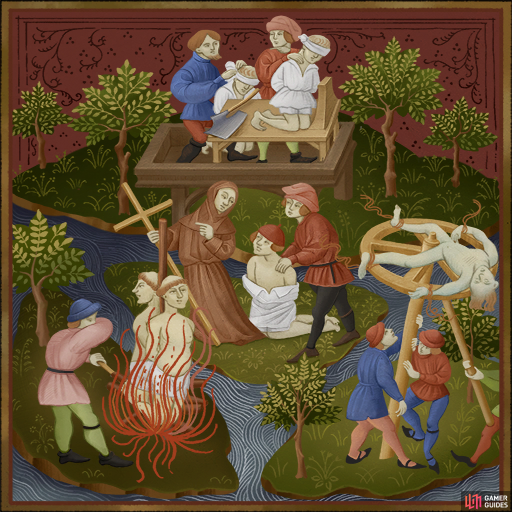
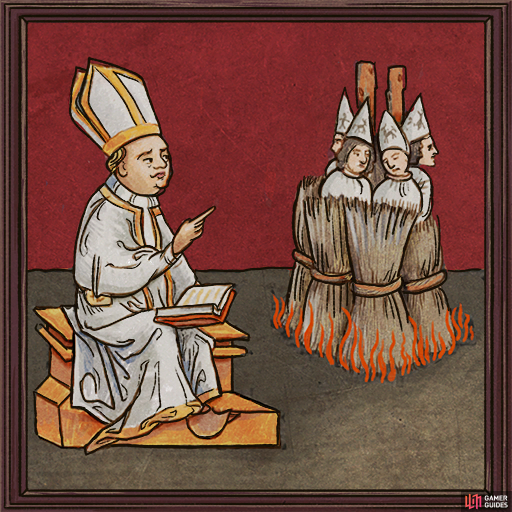
The Inquisition (from Latininquisitio - to search, to inquire) was founded in the 12th century as a response to the massive heretical movement of the Albigensians (Cathars). Originally it was intended to serve more as a tool to punish and direct the clergy, but later its main mission became the fight against all the heretics. It was directly subordinate to the Pope, and thus became more or less an independent power. The Inquisition had three main tasks - to search for heretics; to interrogate them and convict or bring them to repentance; and to refer the unrepentant to the secular authorities for punishment. The incoming inquisitor first reported to the local bishop and then had a solemn mass and sermon celebrated. He then received reports (denunciations) of heresy from the local people. Heretics were given a so-called period of mercy in which they could declare themselves and ask for forgiveness. The inquisitor evaluated the reasonings and began his own process, which was more intended to confirm the accusations, rather than objectively examine them. Although in the common consciousness, the Inquisition is mainly associated with cruel practices, fanatical actions, and a great fear of inquisitors, one of the intended purposes of the Inquisition and its operation, was to rationalize and legalize the trial of heretics and to suppress the practice of ordeals - the godly trials. The Inquisition process was therefore based primarily on the testimony and interrogation of the accused. The accused, however, had almost no rights and could be subjected to torture. The Inquisitorial trial was conducted in secret, but the proceedings were recorded in writing for the needs of the Inquisition. These records were intended to prevent manipulation of testimonies.
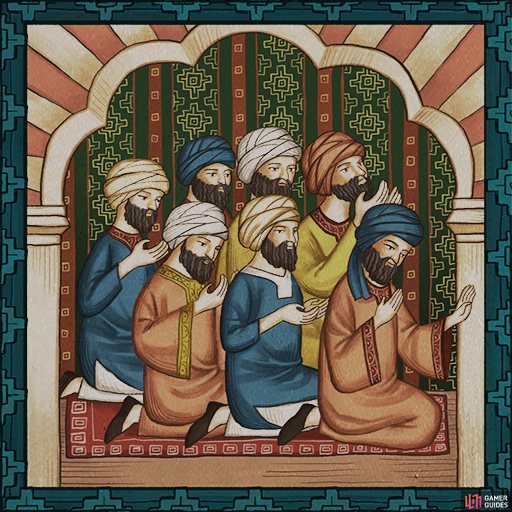
The origins of Islam are linked to the prophet Muhammad and the book Qur’an, which according to tradition was dictated to the prophet by the archangel Gabriel. Chronologically, the most important year is 622 AD, when Muhammad and his followers moved from Mecca to Medina. From there, during the 8th century, it spread rapidly throughout much of the Mediterranean, Persia, and the entire Iberian Peninsula (present-day Spain). By then, it had already split into two dominant branches: Shiites (who believe that Muhammad designated Hazrat Ali as his successor) and Sunnis (who believe that Muhammad did not declare a successor). Islam teaches that God is one and indivisible. According to Muslims, Islam is the sole and original version of the faith proclaimed by earlier prophets such as Adam, Abraham, Moses and Jesus. According to them, the Qur’an is literal and unalterable. The teachings are based on five pillars: the profession of faith (Shahada), daily prayer (Salah), almsgiving (Zakat), fasting in the month of Ramadan (Sawm), and the obligatory pilgrimage to Mecca (Hajj). Islamic law is called Sharia and touches every aspect of life from social organization to the environment, welfare and banking. Although the major monotheistic religions (Christianity, Judaism and Islam) are similar in many ways, their believers still engage in exhausting bloody wars. At the time of our game, the Arabian Peninsula is in a full bloom and is a center of culture, science, and scholarship. Although echoes of the Crusades still reverberate, trade with Arabs is brisk and migration is ongoing.
The Ius Regale Montanorum is regarded as the oldest Czech mining code of law. It was issued in 1300 by King Wenceslas II in Latin. This legal document aimed to address shortcomings in the mining administration of the time and clearly define the rights and obligations of miners and landowners in areas where mineral resources were extracted within the Kingdom of Bohemia. The text was created not only by the monarch and royal officials, but also by prominent legal experts, such as the Italian professor Gozio ab Orvieto. To facilitate navigation through the sometimes complex text, the code was divided into four sections: the Book on Persons, on Mines, on Concessions, and on Claims. This code influenced the development of mining law in surrounding countries, such as Poland, and remained in force in Bohemia until 1854.
The provincial treasury consisted of the nobility (nobles, lords, knights) with their retinues, units of ecclesiastical dignitaries (bishops and from 1344 also archbishops), funds from royal cities, rural bailiffs, and administrators. It served for the defense of the country and was summoned by the sovereign in times of necessity.
It originated around Rome approximately in the 7th century BC and subsequently became the official language of the Roman Empire, from where it spread to surrounding areas during Roman expansions. Over time, its colloquial version (known as Vulgar Latin) evolved into the modern Romance languages (French, Italian, Spanish, etc.), and it also strongly influenced English. After the fall of the Roman Empire, Latin continued to be used as the universal language of scholars, the church, and diplomacy. Anyone who considered themselves educated had to understand and speak it. Learned books were written in Latin, it was spoken at universities and church councils, and it was the official language of documents. Without exaggeration, it was the only language that could be used for communication from Britain to the Byzantine Empire. As an international language, Latin persisted until the 15th century. With the advent of the Renaissance, it was then replaced by national languages.
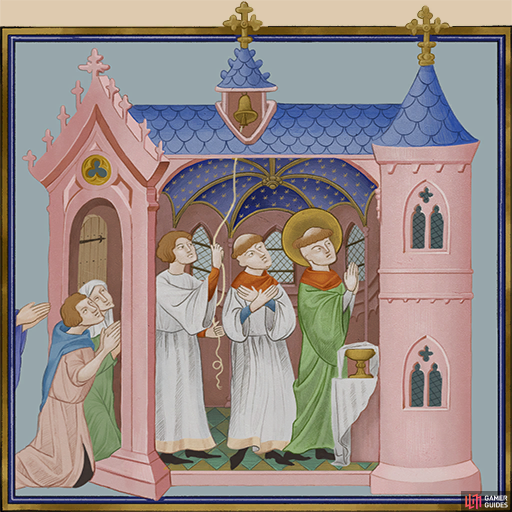
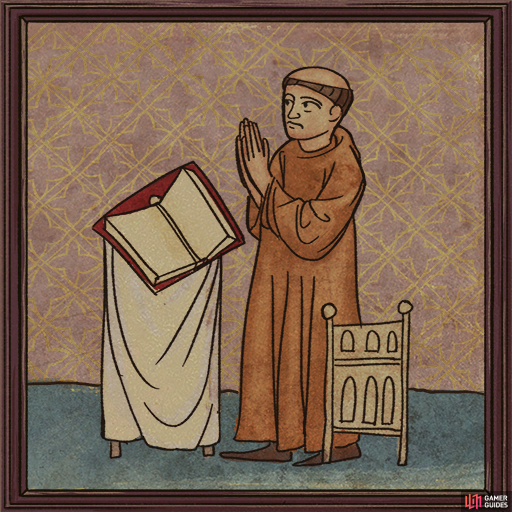
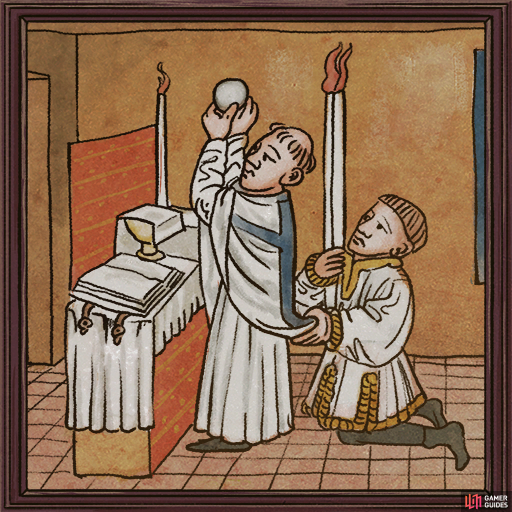
Religious services in the Middle Ages were held quietly and in Latin. A Middle Age mass differed from today’s in its language, approach and the relationship between the priest and the congregation. People stood or moved around, while the priest conducted the liturgy alone, without acolytes or sermons and without Communion. He stood with his back to the congregation, facing the main altar at a distance from the faithful. The sermon was held quite apart from the mass in keeping with a special rite and in between services of worship. Holy Communion (the Eucharist) was available to the common folk only at Christmas and Easter. The inaccessibility of the sacred ritual, along with disgust at the state of the Church, later led to the revolutionary Hussite reform movement, which opened up both the mass and the Eucharist rites to the wider populace.
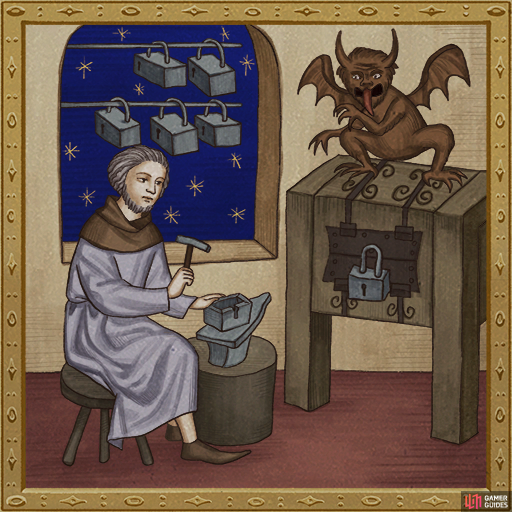
Locks and keys have been made from wood since ancient times, later from metal. A significant advancement occurred around the year 1000 with the invention of the automatically engaging latch and the widespread use of locking with a key. In addition to non-portable locks, padlocks protected by metal casings appeared. In the Middle Ages, more advanced sliding lock systems with rotating keys were also used. According to archaeological findings, locks were commonly found in rural areas, although simple latches were still frequently used. Wealthier townspeople and nobility had their locks richly decorated. Even in the 14th century, locks were still only nailed to the outer side of doors.
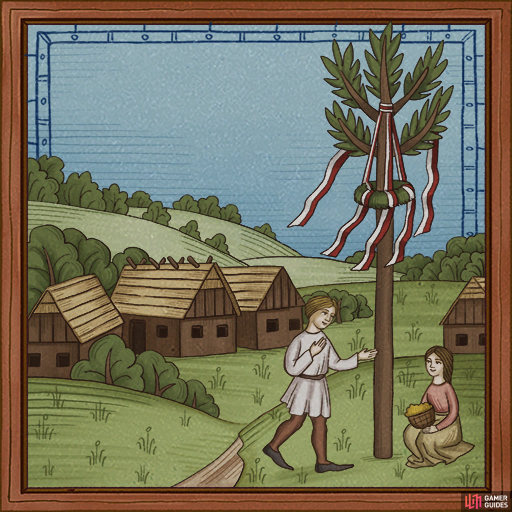
Erecting maypoles is an old pagan custom that has been preserved in our country to this day and has been assimilated into society as a whole. Traditionally, it is a celebration of the arrival of spring, during which boys from the village cut down the tallest tree in the forest and erect its cleaned trunk on the village green, decorated at the top with a wreath and ribbons. According to village tradition, the boys from the village had to guard the erected maypole, while boys from neighbouring villages tried to cut it down and capture the wreath. Guarding or capturing the maypole was a matter of prestige for the whole settlement, and it was not uncommon for there to be loss of life in the process.
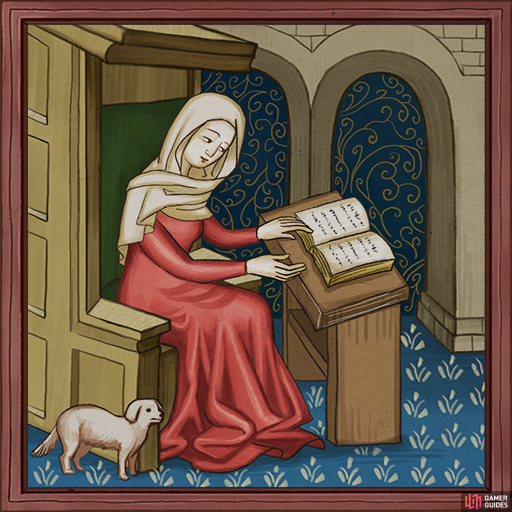
Since we are in the period before the invention of the printing press, a specific feature of medieval literature is that it was practically entirely disseminated by handwritten copies, and many of its works have not survived in their entirety. The most common genres were chronicles and annals, legends of saints, sermons, or prayers. Later, learned treatises, novellas, and very popular chivalric romances were added. Additionally, there existed less frequently preserved humorous songs, couplets, or farces, which remained out of the main focus. Literature was often written in verse and in Latin, with few works being created in national languages at that time. Books were expensive and contained rich decorations and illustrations. Since few people could read, the possession of books was primarily the domain of monasteries, educational institutions, or royal courts. The most significant Czech literary works of our era include the verse epic Alexandreis, Cosmas’s Chronicle Boerorum, the Dalimil Chronicle, and the biography of Charles IV, Vita Caroli. The player will surely notice that in Kingdom Come, we handle books and reading more freely. This was one of the concessions we made for the sake of entertainment and to be able to hide information in books that would otherwise not make it into the game.
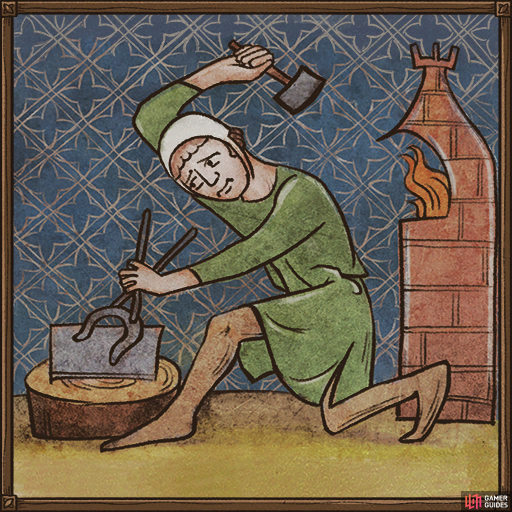
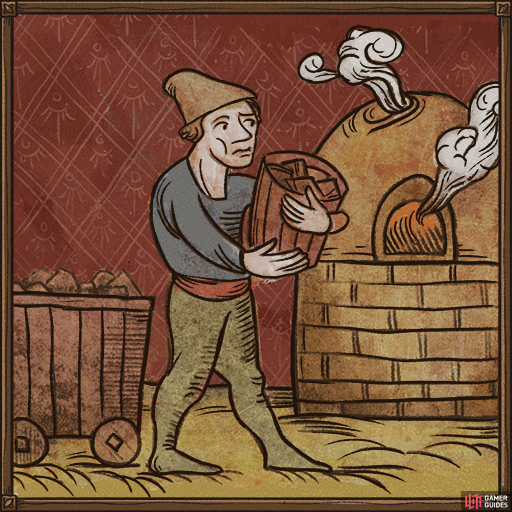
Metallurgy is the process of working metal or its alloys, known and refined over millennia, dating back to the earliest civilisations. Metals can be processed by various methods, such as casting, forging, cold forming, rolling, extrusion, sintering, metalworking, shearing and shaping. In the 14th century, mining and metal processing were organised through guilds that regulated production quality and ensured compliance with labour standards. Guilds played a crucial role in protecting the rights and interests of their members.
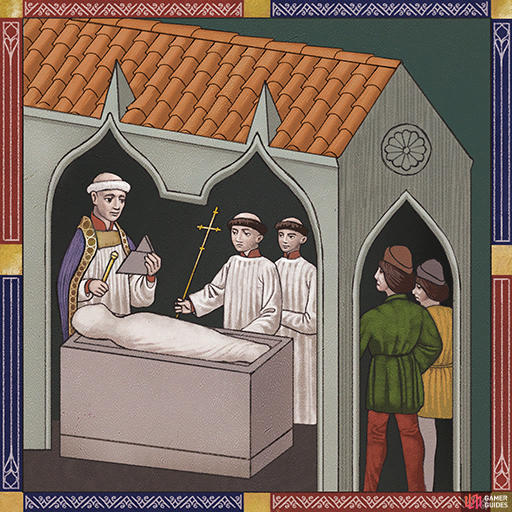
A mortuary was a small, simple structure made of wood or stone, built next to the church in the corner of the cemetery. It housed the coffin stands, called biers, and stored coffins with the deceased. Here, the family would keep vigil over the body of the deceased and prepare it for burial.
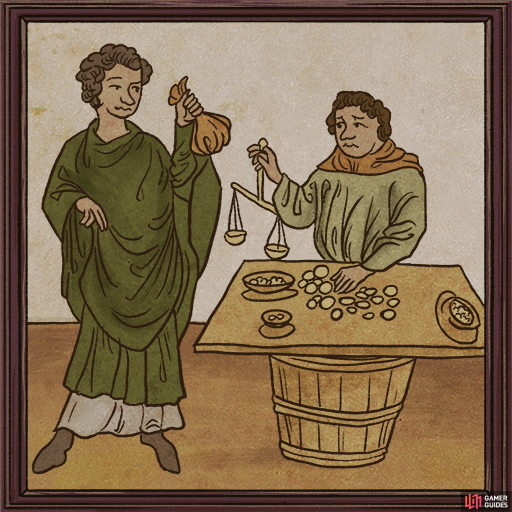
Towns and cities always had to look after their budgets, so they collected taxes, customs duties, tolls and ‘ungelt’ goods tariffs. The most common form of tax was paid twice a year, in an amount dependent on the assets of each respective citizen. Fees and taxes were levied on the economic activities, sales of goods, or services provided by the city’s inhabitants. Another source of civic revenue was money made by the City Council or the City Court for the making of contracts, documents, records, and other routine activities. The treasury also collected money from interest payments, fines, building funds, loans and various rents and feudal dues. Written records were maintained of all revenues. The City Council allocated funds for the purchase of real estate, paid the nobility for defence and security, invested in schools, civic cultural development, churches, administration, salaries of city officials, construction, operation and maintenance of municipal buildings.
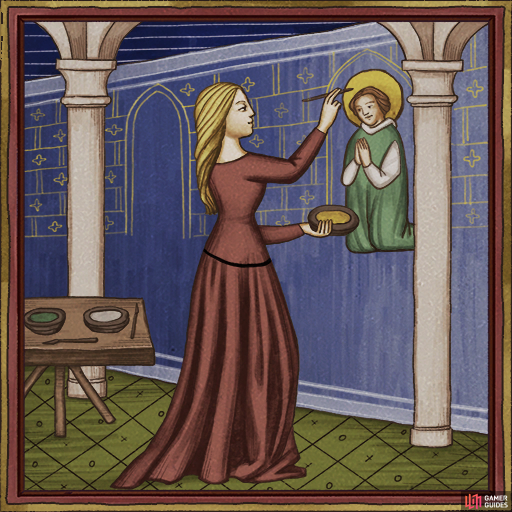
A large part of the population was illiterate during the Middle Ages. Therefore, art was a tool for education and communication among different layers of society. For this reason, preserved works of art are among the best sources of information about the medieval period. Wall paintings, whether sacred or profane, often reveal very detailed information about the lives of our ancestors. While religious paintings focused primarily on spreading piety and humility towards God, secular painting represented cultural and historical moments of local history. Among the most popular motifs were allegorical scenes from the Bible, images of court life or knightly legends, and we also encounter portraits of saints (mostly patrons of the given communities) or significant clergy. The paintings also include events such as the founding of buildings, coronations of rulers, or the granting of city rights. Figures were most often depicted in contemporary or slightly archaized clothing, even if the scenes depicted were perhaps hundreds of years old. The depicted architecture typically contains characteristic Romanesque or Gothic elements and is enriched with a number of symbolic floral and animal motifs. Large-scale murals often came into being with the contribution of multiple artists, whose styles were visibly inspired by the works of contemporary masters of this or that region, as evidenced by similarities in themes, as well as the composition or colorfulness of the paintings.
Minerály těžené v kutnohorských pásmech, převážně galenit, sfalerit a chalkopyrit, se vyznačují nízkým obsahem stříbra, a proto bylo jeho hutní zpracování poměrně náročné. Práce v hutích probíhala nepřetržitě. Používaly se k tomu určené pece s otevřenou výpustí pro jednodušší manipulaci s kovem, nebo častěji s uzavřenou výpustí pro lepší regulaci teploty. Tento proces úpravy byl velmi detailně popsán například v ilustrovaném díle Agricola z roku 1556. Středověký proces získávání stříbra se skládal ze čtyř fází. Skoro každý krok bylo nutné opakovat několikrát, aby se dosáhlo očekávaného výsledku. Struktura suroviny a její složení se měnila od podoby kamínků, ztuhlé taveniny, přes roztavené stříbro s příměsí olova až po pevný „bochník“ čistého stříbra. Hlavním cílem přitom bylo zbavit se nežádoucích příměsí a zredukovat hmotnost rudy na minimum. Poslední fáze – rafinace stříbra metodou přidání určité dávky čistého olova a sháněcího procesu (kupelace) – byla známa již ze starověku. Stříbro bylo taveno s olovem v tzv. sháněcí misce, kde se pomocí oxidace vzduchem oddělovaly nepotřebné příměsi ostatních kovů.
The word urbura comes from the German Urbuhr and means yield or revenue. This term refers to a form of tax, a tribute that miners paid to the monarch in kind, in extracted resources, in exchange for the right to mine metals within the territory of the Kingdom of Bohemia. According to mining law, it was literally the monarch’s share of the profit from metal mining. Urbura was expressed as a portion of the mined metal, which was mostly used for coin production. The collection of urbura was overseen by royal officials known as Urburers. The amount of urbura was determined based on shares and depended on the quantity of ore extracted.
In the heat of battle in the Middle Ages, where most of the combatants had the same or similar equipment, the standard, banner or pennant was often the only way to differentiate friend from foe. Standards also helped lift morale and organize the various units during troop movements. At the turn of the 14th and 15th centuries, standards and banners were the shape of extended triangles, upright rectangles or squares. Flags were fashioned from coloured canvas or silk and the depictions or emblems were painted onto them, most often the coats of arms of the respective feudal lords. Cavalry carried small standards on their spears and craftsmen who were members of the guilds also had their own banners. The guild banner was emblematic of the profession and was shown at public ceremonies and at army and other ostentatious events. The banner of the Bohemian lands dates back to the 13th century and depicts ‘gules, a lion rampant queue forchée argent’ i.e. a two-tailed silver lion raised on its hind legs, on a red background. If the banner is topped with a triangular point, it is reffered to as a pennant.
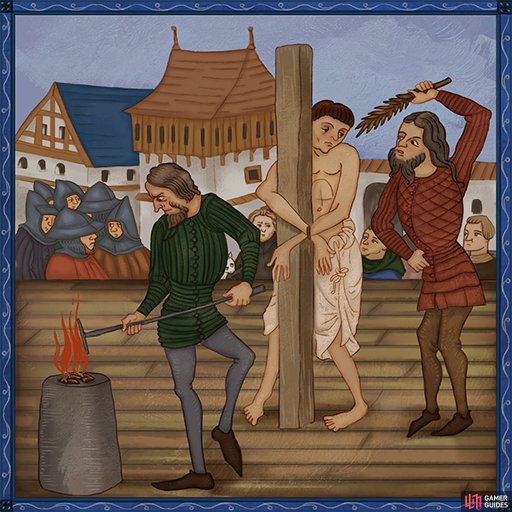
The pillory was located in the middle of the square and was used to administer minor punishments for offenses such as perjury, slander, or fraud. It was most often a wooden or stone column to which the condemned were chained for a certain period (hours or even days). The punishment was then carried out by the entire community – spitting, insults, mockery, and the occasional blow were common.
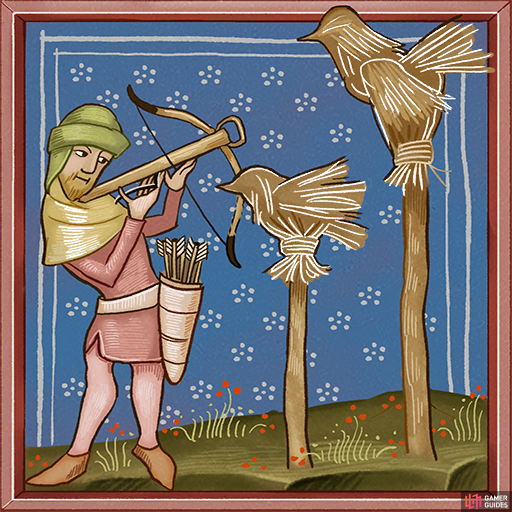
It was a shooting competition to celebrate Pentecost (Whitsun), involving shooting with bows, crossbows, or guns at a live bird tied to a pole, later replaced by a wooden bird. The church criticised this custom and found it offensive because it was held on the feast of the descent of the Holy Spirit, whose symbolic representation in the Holy Trinity is precisely a bird: a dove.
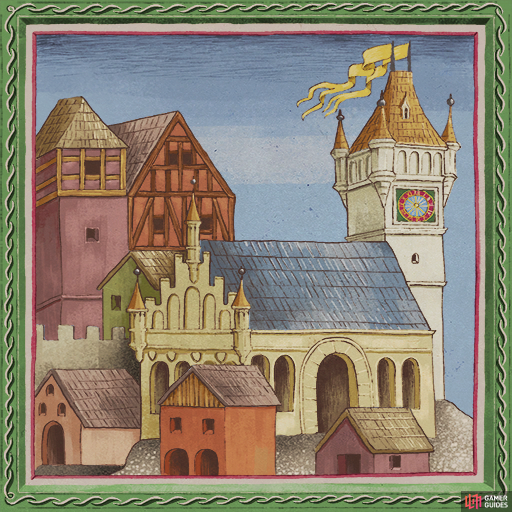
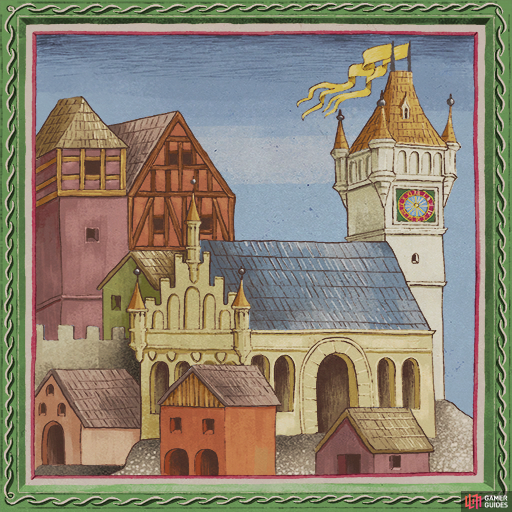
The Town Hall is the seat of the Bailiff and the Council. Originally it was an ordinary town house, gradually transforming into the local government office or Town Hall. In Bohemia the first Town Hall was established at the end of the 14th century. The buildings were usually of brick, at least the lower floors, with many rooms having vaulted ceilings. The ground floor of the municipal building hosted shops, a tavern, the site of the public scales, a sentry room and an armoury. The room housing the public scales (which set the standard for all other scales in shops) had a cubit length measure set in the wall and samples of other small measures and weights, which were universally valid throughout the town’s administrative domain. On the first floor of the Town Hall was the Council Hall, the chapel (in an oriel), the scribe’s study and residential chambers. The upper floors served as a granary or warehouse. In the cellar there was a jail and storage for goods. The Council Hall hosted the meetings of the City Council and its cabinets contained documents, deeds, charters, privileges and the town archive.
A type of unarmed combat known as Ringen (from the German Ring Kunst, meaning art of wrestling) is one of the oldest martial systems widespread in medieval Europe. In an effort to defeat the opponent, the wrestler did not rely so much on brute strength as on a combat strategy that used the whole body, aiming to throw the opponent off balance and bring him to the ground. Kicks, holds and strikes with fists or the edge of the hand were often aimed at the joints. Attacks on the eyes or finger-breaking were also not uncommon. Ringen was taught in swordfighting schools, where medieval masters placed great emphasis on comprehensive schooling in combat. One of those who wrote extensively about refining Ringen techniques was Johannes Liechtenauer, the master of one of the most prominent swordfighting schools of the late Middle Ages, located in Nuremberg.
In the pre-Hussite period, the church owned extensive property, sometimes exceeding the wealth of the nobility or even the king himself. The church also often collected various taxes and fees, which led to conflicts not only between the church and the secular world but also within the church itself. Besides priests, clergymen and their assistants, the church also included monks, archbishops, church officials, clerics and monks – altogether the church supported and employed about a tenth of the population. The high costs of operation and the inability to ensure people’s welfare or salvation, along with numerous wars and plagues, led in the 14th century to a radical weakening of church power and a loss of people’s trust in the church as an institution. The first signs of the reformation movement appeared, as well as many alternative “heretical” sects or a return to old pagan traditions. Mass at that time was more of a social event than a spiritual one. People chatted, flirted, or even made business deals. This changed only with the reformation movement and the return to “true piety” during the Hussite movement. The declining trust in the church was also supported by the first translations of the Bible into the Czech language, thanks to which the ideas truly contained in the Bible could finally spread even among the illiterate population. The spark of revolution had been struck.
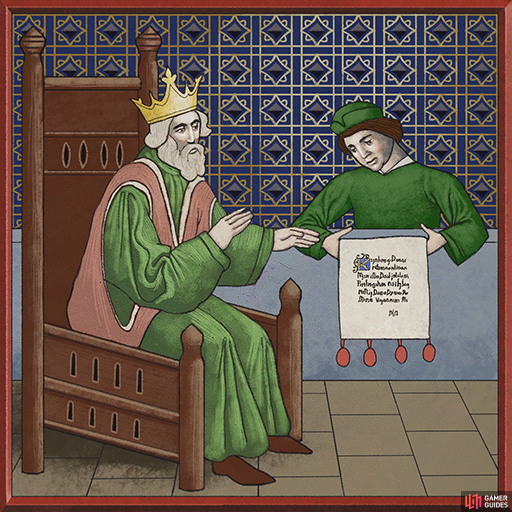
A safe-conduct pass was a document issued by a member of the highest social class to ensure the holder’s safety. Most often, it provided protection in a specific territory during a journey, and sometimes the holder was given an escort along with the safe-conduct pass. For example, Jan Hus received a safe-conduct pass from Sigismund of Luxembourg when he traveled to the Council of Constance. He indeed survived the journey to the council, but it did not save him from death in the flames after the ecclesiastical trial…
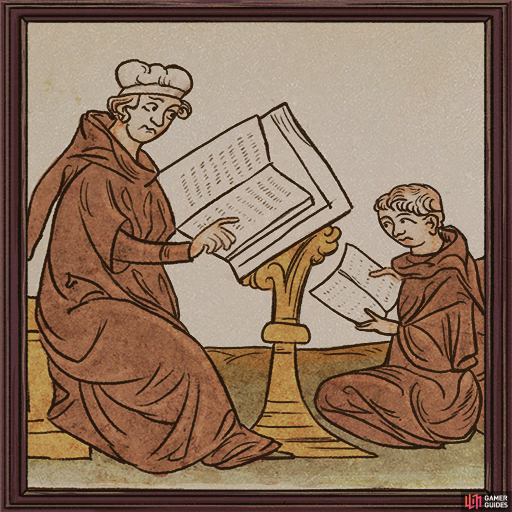
Schooling did not develop until the end of the 11th century, mainly under the direction of the monasteries and the Church. The basic instruction in Latin consisted of seven liberal arts: the trivium - grammar; Latin, rhetoric, dialectic - and the quadrivium - mathematics, geometry, astronomy and church music. During the High Middle Ages, there were two-tiered Latin schools for boys - girls were rarely educated. In fact - education generally did not hold the same value as it does today, most of the nobility and wealthy bourgeoisie were illiterate and hired scribes when needed. Later, centres of secular education were established in the cities, the peak of which was the founding of the University of International Studies in Prague by Emperor Charles IV in 1348.
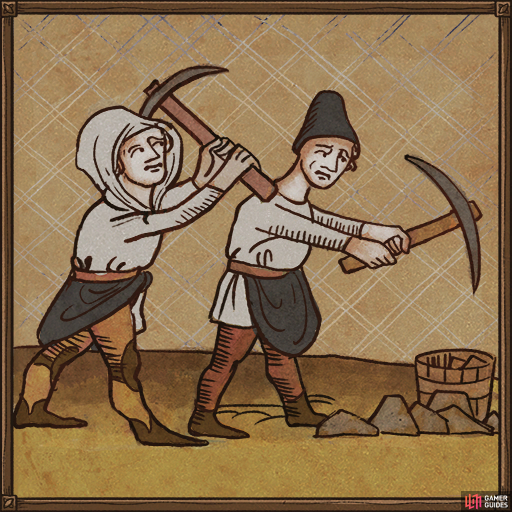
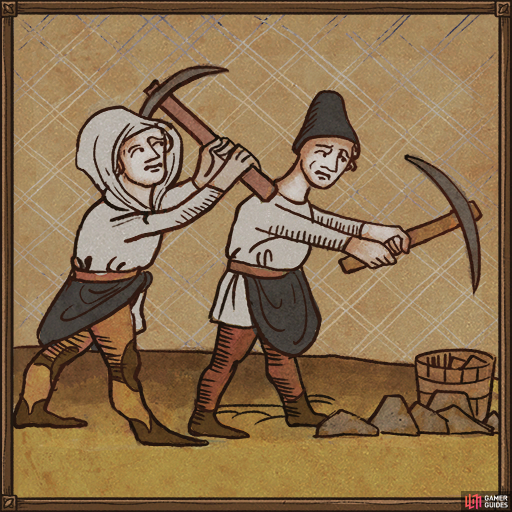
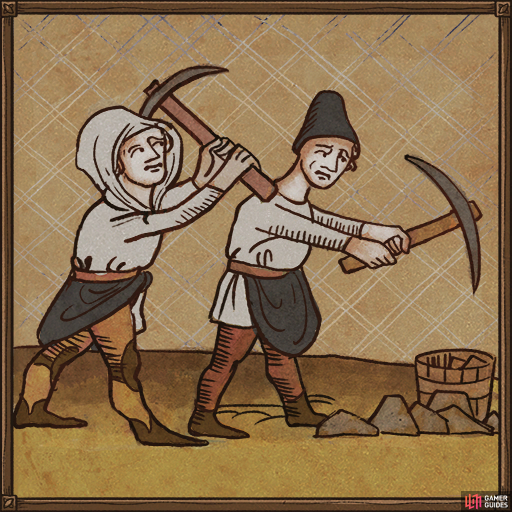
Silver mining in Kuttenberg (Kutná Hora) began in the late 13th century and reached its peak during the 14th and 15th centuries. Research around the town has identified 14 to 15 previously exploited vein zones. At various times, there may have been at least 20, but more commonly 50 or even up to 200 independent mines along these zones. Around the year 1400, silver was mainly extracted in four to five mining zones, known as Oselský, Rejzský, Kuklický, Grejfský, and partially Rovenský. The landscape around Kuttenberg was thus intersected by hundreds of mining corridors and typical clearings appeared due to extensive deforesting in the area. The first independent mine owners, and later the monarch, were unable to ensure the smooth operation of such extensive mines, so parts of them were leased for a share of the extracted ore. Approximately 20 to 30 miners worked in a single mine, while around 700 to 1200 individuals contributed to overall silver production during this period. In addition to the miners themselves, many other workers processed the ore and performed various support tasks on the surface. This included operating and maintaining mining equipment, arranging material transport, and the work of craftsmen such as potters, charcoal burners, rope-makers and others. Each master of these trades had their assistants. Transporting people and materials to and from the mines required a large number of horse-drawn carts, stabling facilities and, of course, people to care for the animals.
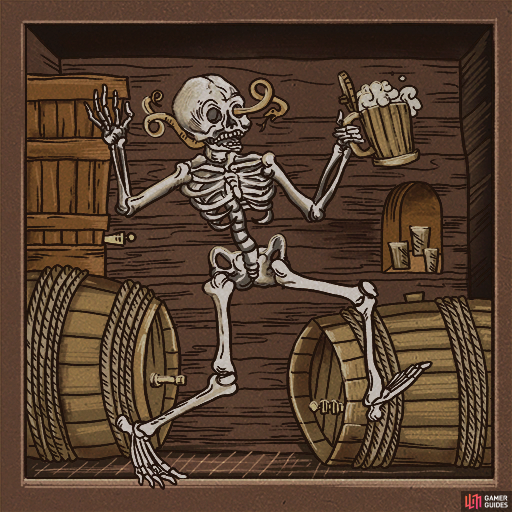
Anyone who has ever visited the tavern frequented by Kuttenberg’s poor, bearing the unflattering nickname of Hole in the Wall surely noticed a local peculiarity: a skeleton sitting at a table. We borrowed it from the book Staré / Nové kutnohorské pověsti (Old/New Kuttenberg Tales) by Jitka Jelínková, who wrote that there used to be a gambling house in the Lower Town, where miners would go to drink and gamble. But the miners’ wives would not stand for it, so they hatched a secret plan. They bought a skeleton from the executioner’s assistant and hung it in the gambling house in the closet where the cards were kept. They hoped this would scare the men and make them give up their habit forever. But instead, the drunk men pulled the skeleton out of the closet, sat it at a table and began to drink with it. To their dismay, the skeleton came to life as midnight struck and started to actually drink its beer while thrashing the inn. For our purposes, we have taken the liberty of borrowing the first part of the story.
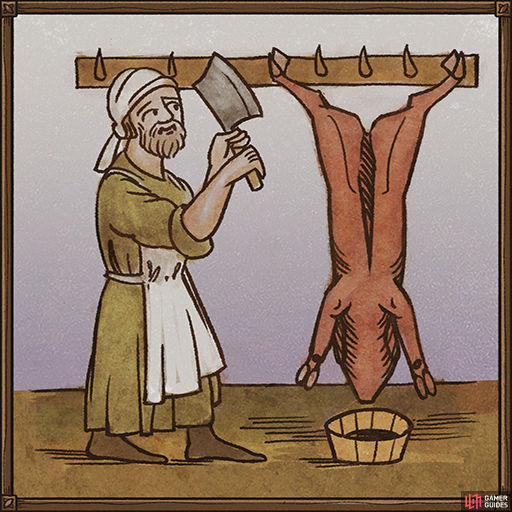
Slaughterhouses, known as shambles, were fenced areas located on the outskirts of towns. Only here was it permitted to slaughter animals, and butcher shops were built nearby. The livestock was inspected by the guild master – only if he deemed the animals healthy could the butchers slaughter and sell them. Slaughtering elsewhere was punishable by a fine.
The main source of light after sunset in households was fireplaces and hearths. When that was insufficient, torches (flambeaux) were used to illuminate pathways or dwellings in the Middle Ages, along with lanterns, oil lamps and candles. Ceramic or metal oil lamps had a bowl shape, sometimes with a handle. A wick immersed in oil was used in these, and later, wax was added. In wealthier households, chandeliers were hung from the ceiling with chains. In villages, simple lamps burned tallow instead of vegetable oils, and split wood torches were used. Tallow candles were smelly, smoky, and melted quickly. They needed to be wiped, and the tallow collected for reuse, which is why they were placed in holders with a bowl. In Central Europe, beeswax was considered an extraordinarily expensive commodity in the Middle Ages and was even used as a form of payment for guild fees (“payment in wax”).
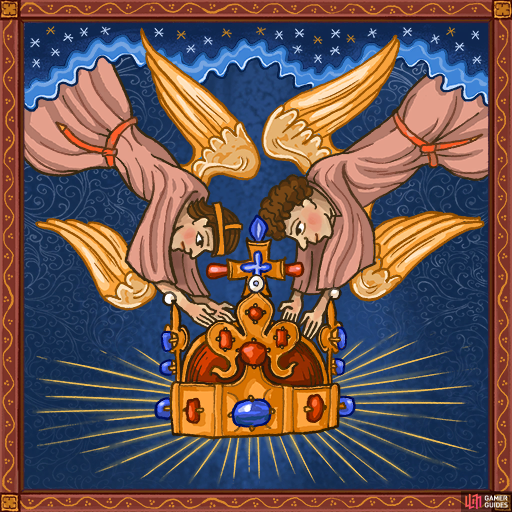
For the coronation of Charles IV as King of Bohemia, a new unique crown was made - the St Wenceslas Crown. It was made from the old Přemyslid Crown and the monarch himself dedicated it to St Wenceslas. No Czech king was allowed to wear it, he could only borrow it for a fee on the occasion of his coronation. The crown is made of pure gold adorned with gemstones and pearls, and is kept in a chamber with seven locks above the St Wenceslas chapel in Prague Cathedral. The keys are held by the leaders of the Czech State: the President, the Prime Minister, the Archbishop of Prague etc. There is a legend that if the Crown is worn on the head of anyone other than the rightful Czech King, the wearer will soon die. It is reported that during WWII, the Nazi Reichsprotector for Bohemia and Moravia, Reinhard Heidrich, put it on – and died shortly afterwards at the hands of assassins. The story is probably apocryphal, but certainly interesting.
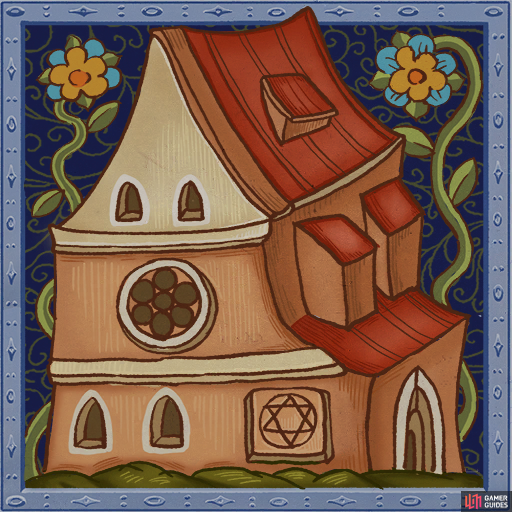
The Jewish prayer hall, used for religious services as well as for social and educational gatherings, is known in Hebrew as a “house of prayer” and in Yiddish as a “school.” It serves the Jewish community as a center for both spiritual and social life. It is typically oriented towards the east (towards Jerusalem), with the eastern wall housing an ark that contains the Torah scrolls. In the center of the synagogue is a raised platform called the bimah, used for leading prayers and reading from the Torah. In Orthodox communities, there are separate spaces for men and women, but in most Jewish congregations, the space is mixed. Jews celebrate their holy day on Saturday (Shabbat), but prayers are conducted every day. One of the oldest Gothic synagogues in Europe is located in Prague (the Old-New Synagogue).
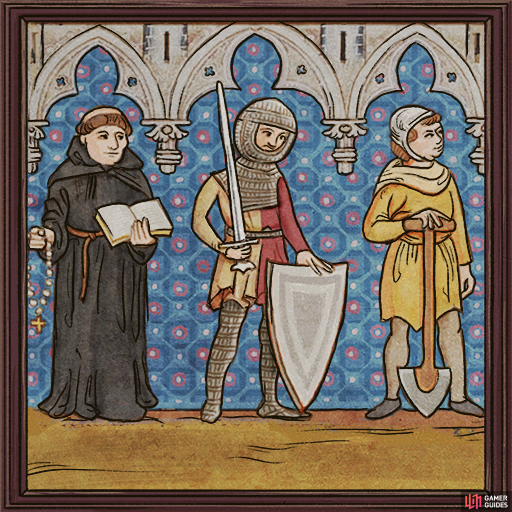
Serving as a figurative description of the ideal medieval society, the theory was that God divided society into three groups: warriors, clerics and peasants. The warriors were supposed to defend society and included nobility, soldiers and executors of state power. The clergy cared for salvation and education, and those serving the church and educated scholars could also be included here. The last category comprised the greatest mass of society; the task of the peasants was to work and feed the whole society.
A well-known Latin proverb says: Tu ora, tu protege, tu labora. (You pray, you protect, you work) Though the division into classes is determinant and limits the freedom of social mobility, at the same time it guarantees social harmony. Everyone knows their place, what is expected of them and what plans God has for them.
It wasn’t until the 15th century that some church reformers began to dismantle this teaching. For example, Petr Chelčický (a follower of John Hus) came up with the bold thesis that all people are equal.
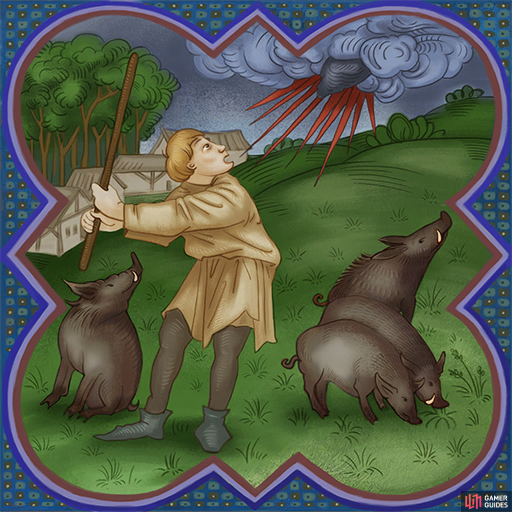
Numerous folk tales mention the “thunderstone” – an object that supposedly falls to the ground along with lightning during a storm. Sometimes it falls immediately; other times it appears only after seven days, months, or even years. Its size is said to depend on the strength of the lightning, the depth it burrowed into upon impact, and the manner in which it later surfaced. This led to various popular beliefs about it, which, however, had little basis in reality. In fact, “thunderstone” referred to various prehistoric stone tools or different types of stones notable for their unusual colour, shape, or unique location in the landscape. The thunderstone was reputedly believed to bring abundant crops and to protect fields from lightning, hail, and pests. One custom stemming from pagan traditions was, for example, placing a thunderstone into seeds at sowing time. The stone, however, had not only a magical but also a practical function. It was used to mark territorial boundaries and served as a safeguard for clearly defined territory. Sometimes it could even become part of tools or weapons.
A ‘tithe’ was a compulsory tax levied since ancient times. It was paid to the parish priest or other religious institution. The term comes from Old English and means an amount of one tenth of the value of the harvest. The inhabitants of monastery estates had the misfortune to be taxed twice by the Church – once in the form of a tithe, the second time as a mandatory levy for their occupation of Church land.
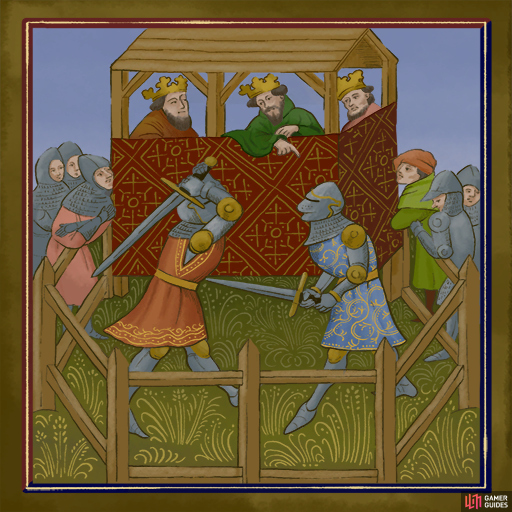
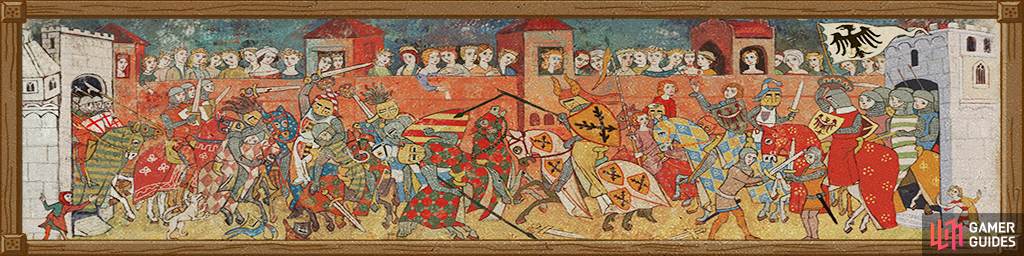
The first tournaments took place in France in the 10th century during the reign of Henry I. They quickly became a popular entertainment initially at courts, later spreading throughout Europe and captivating people of all social standings. Tournaments were multi-day celebrations accompanied by actual combat and numerous ceremonies with symbolic significance, solemn religious services, feasts, dances, and more. Tournaments were organized by the nobility to celebrate the culmination of important political negotiations or extraordinary events such as coronations, royal weddings and engagements, oaths of allegiance, peace negotiations, and so forth. The aim was to demonstrate skill and mastery in combat, to shine in front of others, and often to receive substantial rewards. Tournaments were either individual, where two knights faced each other on horseback or on foot, or team-based, where two teams competed in the arena. In both cases, the objective was to knock the opponent to the ground without killing or seriously injuring them. Even so, injuries and even deaths were not uncommon. The Church initially strongly opposed tournaments, and it wasn’t until the 14th century that it lifted the general ban and allowed their organized and unpunished conduct.
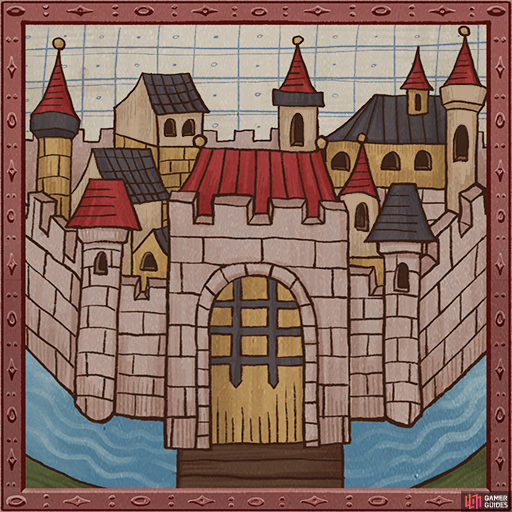
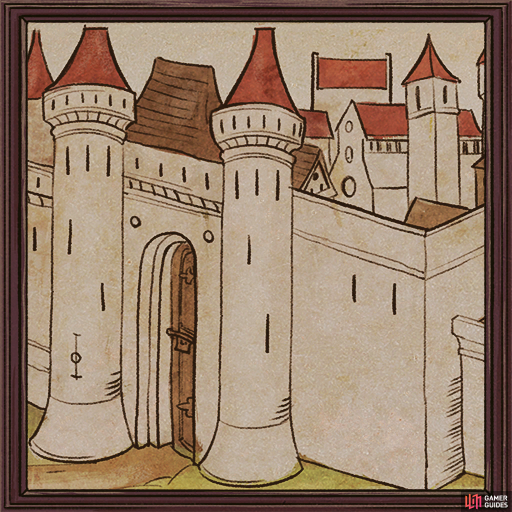
City gates (there were always at least two) controlled the comings and goings of the city dwellers, and collected tolls and duties from traders for goods they brought and sold. The ground level housed the armoury and storage facilities, while the upper level featured an astronomical clock or town clock. The typical gate tower was a lower or higher rectangular tower with a passageway and a drawbridge over the front moat. The walls of some cities also included a water gate, through which townspeople made their way to a water supply. Special entrances included gates designated for the executioner and his assistants, unclean people, and the so-called Jewish gates. After closing time, entry into the city was only possible with special permission from the councilors. Those who did not return in time had to sleep outside the walls. The gate was locked with a key, which was kept at night by the Bailiff or the Head of the City Council.
In the Middle Ages, the merchant settlements and villages on major trade routes or around castles became the first towns. They were founded by specialised entrepreneurs, the so-called locators. Their task was to seek out settlers, prepare and apportion land and build a community. The ruler set down the rights and obligations concerning the locators and settlers, e.g. the level and method of collecting taxes and benefits, town privilege rules of self-government (capital justice rights), trading (market rights and ‘one-mile’ selling rights) and brewing and handling beer (brewing rights). Newly established settlements and cities were often exempt from taxes for a certain period (lhůta) from which is derived the name of many Czech villages, Lhota). Towns were of different types; royal, seigneurial, mining and dowry (which belonged to the Queen). Seigneurial towns were divided into ecclesiastical, secular (feudal) and those of the Royal Chamber. Apart from the feudal settlements, towns were mostly rectangular in layout with streets perpendicular to a central square featuring a Town Hall, market and a church. Until the 14th century, the main streets and squares of the largest towns remained unpaved (uncobbled). Waste was emptied directly into the street or thrown into waste pits dug around the houses, despite the fact that sanitation had existed since antiquity. Gutters of rammed earth carried sewage and rainwater alongside the streets and an unpleasant smell hovered over the towns. Settlements were surrounded by wooden palisades, and from the second half of the 13th century, walls, which had to have at least two gates.
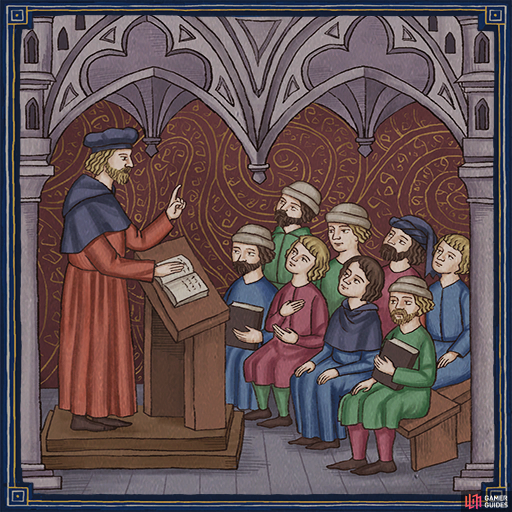
One of the oldest universities in Europe was Charles University, founded in 1348 by Charles IV. Students could study at the Faculty of Arts, Theology, Medicine, and later also at the Law Faculty. The Faculty of Arts aimed to expand basic church education and teach grammar, rhetoric, dialectics, arithmetic, geometry, astronomy, and music. By the early 15th century, more than 1000 students were enrolled, accommodated in collegiate housing known as colleges. 80% of the students at the Prague university came from abroad, particularly from Hungary, Austria, Poland, and Germany. In medieval times, one could graduate from university with a Bachelor’s, Master’s, or Doctor’s degree. The requirement included an oral examination before a committee. Some fields of study took longer than today – up to more than 10 years. Upon passing the final exams, the student received a diploma. Since its inception, the university has been led by a rector and deans of individual faculties, along with members of the university council and numerous instructors: professors and lecturers. Among its lecturers and prominent figures was Jan Hus, who also held high positions at the university.
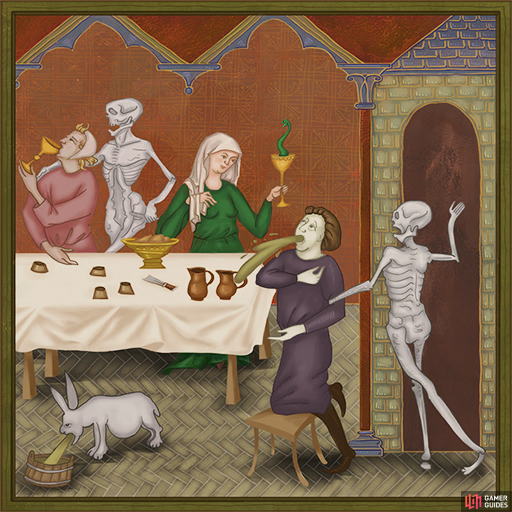
…were a relatively common way of solving socio-political problems. The most commonly used poisons were alkaloids from hemlock, henbane, deadly nightshade, or poisonous mushrooms added to food or drinks. Among the most popular drugs were abortives (inducing abortion), aphrodisiacs (stimulating sexual excitement), analgesics (relieving pain), antiseptics (destroying bacteria), digestives (improving digestion), laxatives (promoting bowel movements), narcotics (inducing sleep with calming effects), and tonics (acting regeneratively and nutritively on the body). One of the worst food poisonings that affected broader rural society involved rye contaminated with the parasitic ergot fungus - before identifying the source of the poisoning, thousands of people fell victim to it, often resulting in accusations against local “witches” (ergot in lethal doses causes delirium and hallucinations). Indeed, the origins of “witchcraft” beliefs and accusations often stemmed from intoxication by psychedelic substances, sometimes used in the production of potions and ointments.
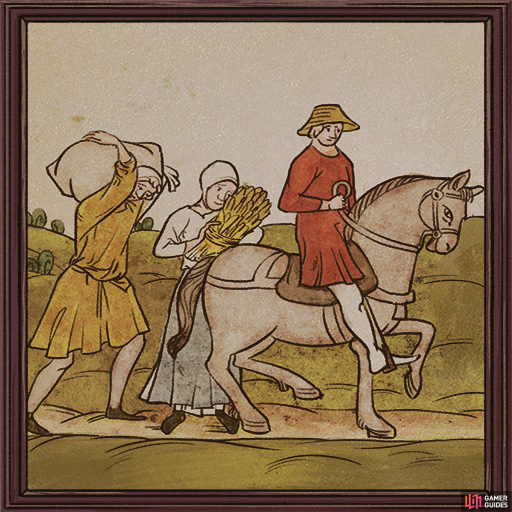
Bohemian villages underwent a significant transformation at the turn of the 13th and 14th centuries. Peasants could inherit farms and wages, and trade began to have clear rules. The shape of the villages also changed – from chaotically scattered homesteads to organized plots with a regular geometric layout providing ample space for roads and markets. The number of houses ranged around 20 to 25. The center of the village was the village green – a public space that served as a social, cultural, and economic hub, with fences marking the village boundaries.
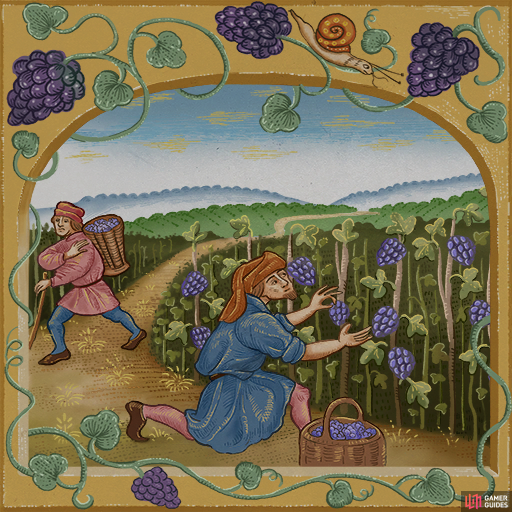
Vineyards have had a tradition in Europe since ancient Greece, but it was in the Middle Ages that this noble profession truly flourished. Wine was brought to Bohemia by Charles IV, who had developed a taste for it in France and wanted it cultivated in our region. It was at the end of the 14th century that vineyards were established in Kuttenberg, Mělník, and Prague. The spread of vines was also facilitated by the warmer climate during the Middle Ages, allowing cultivation in otherwise agriculturally uninteresting locations (dry, rocky areas). You would have difficulty finding the familiar taste of today’s wine in medieval wine. Due to the lack of preservatives, spices or honey were added to the wine, and it was often diluted with water because it was consumed throughout the day. Only with the discovery of the sulfur wick was it possible to properly disinfect barrels and preserve wine for longer periods, allowing for the abandonment of flavorings and preservatives. The vineyards themselves were most commonly planted on southern (sunny) slopes. The wine was either grown as a low bush or trained to climb poles. The modern system of wire “rows” was not yet used. Work in the vineyard was year-round. Pruning was done twice a year, the vineyards were often hoed, and pests and fungal and mildew diseases had to be managed. The peak of the season was the harvest and the subsequent marathon of processing the berries, including pressing, straining, decanting into barrels, and then wine fermentation. Each monastery or private winemaker had their own carefully guarded procedures and methods.
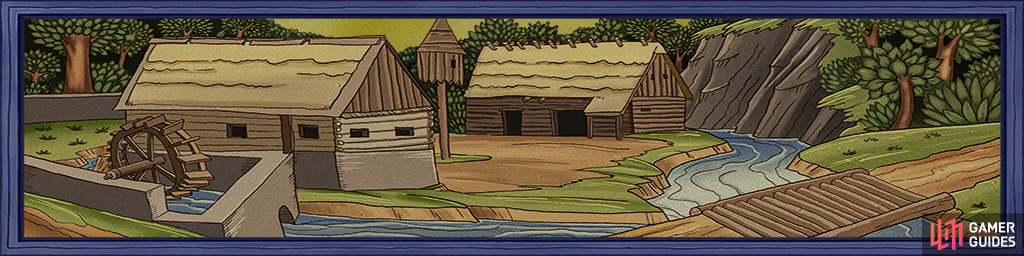
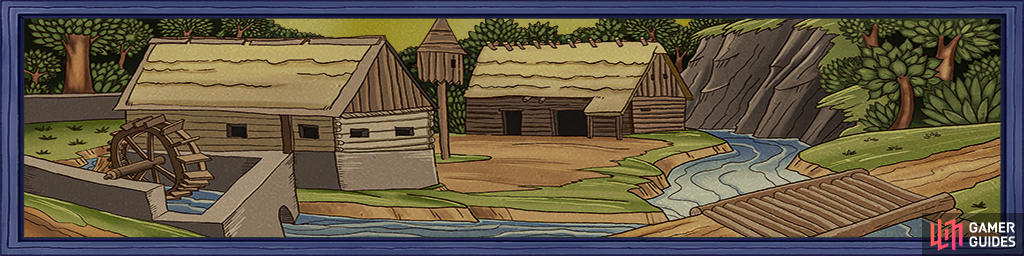
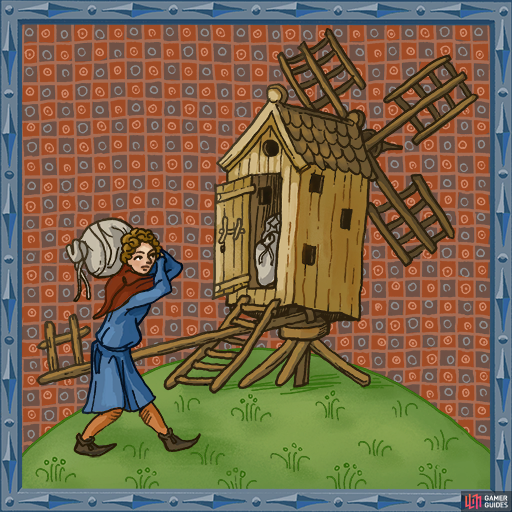
By the end of the 14th century, most rural towns had an average of up to seven mills. Water-powered mechanisms operated hammers, fulling mills, sawmills, water pumps, bellows (in forges and foundries), or devices for breaking hemp. Each mill consisted of three parts: the motor, the transmission system, and the working device. The motor was the water wheel, and the transmission system comprised various components that changed the direction of force, ensuring a smooth transition from the slow rotation of the water wheel to a faster one. The working device varied according to the purpose of the structure. The core of grain mills were the millstones: the stationary lower stone called the bedstone and the rotating upper stone called the runner. Grain was ground between these stones. Proper placement was crucial for a mill: the current had to be neither too weak nor too strong, and in our climate, the strength of the river current varied significantly with the seasons. Therefore, the miller also had to build artificial channels and weirs to regulate the flow.
Water powered sawmills have existed in Europe since the 4th century and in Bohemia they date back to the Middle Ages. The earliest sawmills were equipped with only one machine, a single-frame, single-bladed saw that cut the log in half. Over time, this was supplemented by a circular saw with a long movable table, which was used to cut the edge of boards vertically. Other innovations of the time included the extension and improvement of saw frame blades, but the system itself remained unchanged. Water motors were used to power both types of machine (see Watermill).
Humans have been using weapons made of wood, stone, bone, and antlers since the Paleolithic era. Initially, due to the materials used, piercing weapons like spears, knives, and arrows were the most common. Later, with advancements in metalworking techniques, slashing weapons such as daggers, axes, and swords began to be produced. Besides these two traditional types, we also know of striking, throwing, hand-held firearms, artillery, and positional weapons. In the medieval period, spears, halberds, and crossbows were common. In villages, agricultural tools were often used as weapons. From the 14th century, cannons using gunpowder (known in China much earlier) started to be used in Europe, and firearms began to spread gradually. Records of the use of hand-held firearms in Bohemia date back to the reign of Wenceslaus IV, with their use documented in 1398 during the siege of the archbishop’s court in Kyje near Prague.
Windmills became prevalent in Europe between the 11th and 14th centuries. The most suitable environment for their construction was to be found in the foothills of mountains, on plains and in coastal landscapes, where strong winds abounded. They were generally wooden post mills, standing on a characteristic conical trestle log base. They could rotate around the central stake to face into the wind. As a rule, the mill had four vanes - sails set in a rectangular cross mounted on the front wall of the building. As the wind pushed against them, they set wooden gear mechanisms in motion and transferred torque to the millstones, located on the first floor. The disadvantage of windmills was their frequent need for repair and maintenance, and they were often struck by lightning. When operating, they vibrated intensely, which was neither pleasant nor safe for those working inside.
Forests belonging to the monarch, especially near borders, played not only an economic but also a strategic role—felled trees formed an important part of fortifications. From the 14th century onwards, efforts were made to protect forests, with only the ruler having the authority to decide, for instance, whether peasants could fell trees for construction. The monarch could also permit farmers to graze cattle or burn charcoal on their lands, provided that deer could safely birth their young. Peasants were tasked with mowing grass and drying hay in the forest meadows and were allowed to catch hares. Hunting other game was strictly forbidden for anyone except the lord of the forest, under severe penalties. At that time, forests were predominantly composed of beech-fir and mixed oak, where only certain trees were felled: oak for water constructions, beech for charcoal burning, etc. Overall, forest cover suffered significant damage during the Middle Ages and was completely eradicated in some areas.