
 First Impressions
It's Alive! We played Highguard and left impressed

Pros
- Heroes have interesting kits
- The different bases really factor into your approach of a match
- Same great gunplay from Apex Legends
- Raids are exhilarating
Cons
- Jury's out on lasting power
- Requiring Teamwork is not to everybody's style
The Game Awards is always an exciting time for video game fans, whether they see their favorite game being crowned Game of the Year or speculating and enjoying the many new reveals that often happen there these days. Chief among all of them is that coveted final reveal, that “one more thing”. What could it be this time around? Half Life 3, the final part of the Final Fantasy VII Remake series, or even a new trailer for Intergalactic were all on people’s lips. What was shown, however, was something nobody expected.
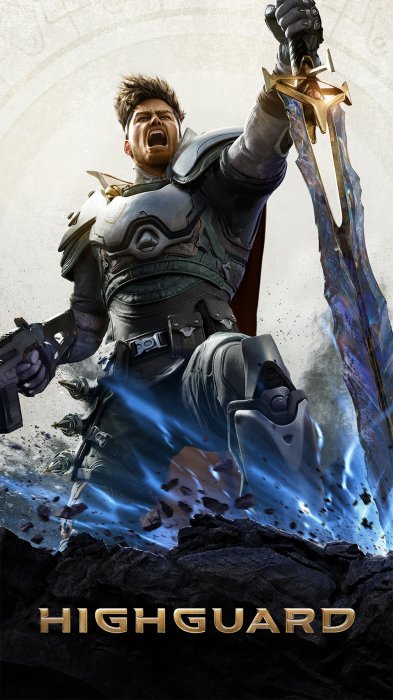
First-time developer, Wildlight’s Highguard took that honor. Boasting an exceptional pedigree from the creators of Apex Legends and Titanfall, and a promise of something new for the FPS genre, the trailer certainly got people talking. A lot of that was centered around people being disappointed that their ideal game announcement didn’t happen, and the discourse since has only gotten worse, with no new information having been released or shown since, outside of the launch date of January 26th.
Fortunately, we can confirm that, yes, Highguard is very real, is not getting delayed, and that we were invited to an exclusive launch event in LA this past week to go hands-on with it.

Highguard is a unique blend of genres that succeeds at being fun to play.
The Likely Heroes
A lot of the questions people were asking after, admittedly, a trailer that didn’t reveal too much, were just what this game actually was. Is it a large-scale FPS like Battlefield, a Battle Royale like the previous game the developers worked on, Apex Legends, or perhaps even a MOBA (such as League of Legends). Fortunately, Highguard is none of them and very much its own thing, something that was incredibly fun to get stuck into. Before we continue, let’s break down how a typical match of Highguard plays out.
Right from the outset, the goal in Highguard is to destroy your enemy’s base, or rather, deplete their health pool, which starts at 100 for both teams. You’ll chip away at this in a number of ways, such as beginning a raid, taking out generators at said base (or the Anchor Stone for a quick win), or successfully defending your base during a raid. This is just the basis of the win condition of a match, and it can take anywhere from eight minutes to around 30 for it to play out.
You really have to take into account what team you’re using when you choose a base.
Once you’ve successfully started a match, your team of three will start by choosing one of the eight heroes available at launch. As you would expect with most games featuring heroes, they’ll have a skill, an ultimate, and a passive, and while these can be very powerful (looking at you Mara), the developers stressed that Highguard is a gun game first and foremost, that is the single most important part when it comes to skill. Still, you’ve got a nice, interesting selection of Heroes to play with at launch, sorted into “classes”, such as Support, Defense, Assault, and so on.

Kai’s use of Ice Walls allows you to shut down chokepoints.

You can use various currencies to get new cosmetics for your Heroes.
With your hero chosen, the next step is to lock in what base you want to have for the match. There’s a selection of six available at launch, and these really factor into how you approach a map. Each base will favor specific setups and playstyles when it comes to defending it during a raid. Take Hellmouth, for example, which features a lava-pit surrounding it, with chokepoints and high sharpshooting positions. This means a Hero like Kai, who can erect walls of Ice, can shut down said chokepoints more easily. You really have to take into account what team you’re using when you choose a base, even if the game will recommend one based on your chosen heroes.
Taking to the Field
Once the game begins fully, you’ll have one minute to prepare the defense of your base. This plays out a bit similar to something like Rainbow Six: Siege, where each player is given five walls to reinforce the base with iron, usually around the generators and anchor stone to slow down the enemy assault a little. Still, you could save some of these walls for the point of attack or even break down some walls yourself to create better sightlines. There’s a lot of potential here, and I’m curious to see how the meta plays out there.
Once this time limit is up, you can leave your base, preferably by using your mount, which is just a click of a button, and ride around the surrounding map, of which there are five at launch. The goal here is to use this time to gear up, be it by finding chests that wouldn’t be out of place in a Battle Royale, or breaking crystals, named Vesper, which acts as a currency that can be used at the shops around the map, or when you’re respawning. In terms of defensive gear, you can get Armor, Helmets, and an Amulet (which gives passives such as faster bomb planting), while there are a whole host of weapons to loot. As expected, these come in certain tiers, adding new features to them like a larger magazine or different ammo types. As a match goes on, the more times you get to this phase, the higher the rarity of the loot will be.
It’s a great way of keeping the matches feeling snappy, rather than being locked down in a never-ending loop of trying to escort the Shieldbreaker.
After the two minutes are up, the Shieldbreaker will spawn (marked on your mini map). With this in hand, you can take it to your opponent’s base and use it to begin a raid. Of course, both teams will fight over this spawn, and whoever has it will emit an aura around them, alerting others to their presence. There is a timer that ticks down during this phase, and if nobody has raided a base by the time it runs out, you’ll enter an Overtime state, where everyone has one life. If you wipe the other team, you’ll begin a raid on their base without having to take the Shieldbreaker there. It’s a great way of keeping the matches feeling snappy, rather than being locked down in a never-ending loop of trying to escort the Shieldbreaker.

During the gear up phase, you ride into the world to find crates with weapons or armor of varying rarity.

This will serve you well during the chaotic Raids.
Perhaps the part I enjoyed the most, however, was the Raids themselves, be it attack or defense. These are as chaotic as you’d expect and really shift your mindset from the previous parts of the match. Walls can be broken down using raid tools (such as Rocket Launchers and Blast Hammers), traps can be set using your Hero’s abilities, and your gunplay is put to the test. The general trend I noticed during the launch event was to take down the generators, as the anchor stone takes a lot longer to set off, and in harder-to-reach places. Still, I did have the odd match where we rushed the anchor stone and won the match quickly. Still, if you’re on defense, don’t give up hope, as if you hold out long enough, the enemy’s attack phase will come to an end, and you’ll score some damage on their base as a result. The way Highguard plays out, I was able to come back from a match with only 10 health left on my base several times.
Lasting Power
Outside of the matches themselves, you can complete seven quests per episode, positioned as challenging content, alongside Daily Challenges, which both reward you with two different currencies. One will allow you to work on a battle pass, the first of which is free, and will allow you to unlock some costumes, emotes, skins, and banners. The other type of currency is the premium one, which is to be expected in these games, and there are some fantastic-looking bundles available at launch for the Heroes. I can already envision Kai’s Demon Prince costume being a popular pick.
More importantly, though, is Highguard going to be a game that players will want to stick around and play? I’m of the opinion that the matches are fun enough that I can see myself sticking with it for a while, provided the player base is there. If you’re a fan of the gunplay found in Apex Legends, you’ll know what to expect here, which should be of no surprise given the pedigree behind Highguard.

Although gunplay is king, your Hero’s abilities can help turn the tide of a tricky situation.
I’m still undecided on whether I think the silence following the reveal at TGA was for the game’s benefit or not. While it’s caused (unfair, in my opinion) discourse around the game, it has also put the name on everybody’s lips, whether you see it as a good thing or not. Wildlight insists that the plan was always to reveal and shadowdrop Highguard, much like Apex Legends, however, once they got the opportunity to show the game at TGA, they couldn’t turn it down. The goal has always been to let the game do the talking for it, and having had ample time with Highguard, they’re certainly right. This is definitely a game you need to play yourself to form an opinion on.
After a full day of playing Highguard, I had nothing but fun while playing, and sitting here writing this up, I find myself wanting to jump on and play some more. Fortunately, I, and indeed, you, won’t have to wait too long since the game launches on January 26th.
Gamer Guides were invited to a launch event in LA thanks to TriplePoint PR and Widlight Entertainment.
Raidtastic
With a fantastic pedigree behind it, Highguard is shaping up to be a breath of fresh air for the shooter genre. Hooking me from the moment I started playing, the full release can’t come sooner.
Gameplay:
Sound:
Graphics:
Story:

No Comments