
A Unique Take on the Gacha Genre

Pros
- Factory system is unique
- Wuling especially looks fantastic
- Interesting combat system
Cons
- A lot of (necessary) tutorials break up the pacing at the start
- Gacha system will divide some people
- Factory building may be over complicated for some players
Arknights has been around for a long time now, first releasing in China back in 2019 before making its way overseas, and has been relatively successful the majority of that time, despite never seeing a full PC or console release. In a time before HoYoverse launched Genshin Impact at the tail end of 2020, Gachas were not done in an ambitious open world setting that would soon set the trend following its success.
Arknights, then, focused on telling its story in a visual novel presentation (without voice acting) alongside Tower Defense-style gameplay. Despite requiring a lot of reading from the user, it delivered arguably some of the strongest writing for the genre, making it an instant hit with the world and lore it built up.
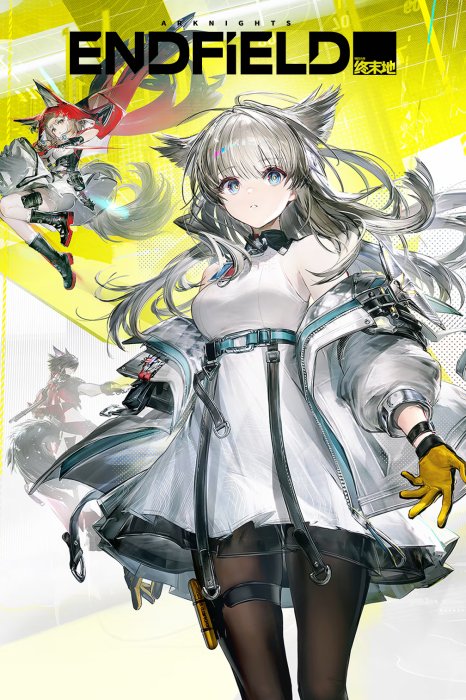
Fast forward to 2022, and developer Hypergrpyh announced their own take on the current trend of Gachas with Arknights: Endfield, a spin-off of the original that takes place on Talos-II as a 3D RPG with segmented exploration vs an open world from its competitors.
As the Endministrator of Endfield Industries, it’s your task to manage the corporation, stop the calamities on Talos-II, and solve a mystery linked to you.

The Wuling region looks especially beautiful in Arknights: Endfield.
Awakening from your Slumber
Arknights: Endfield’s story is an interesting one, and one that is different from a lot of the other Gachas created in the past few years. After a cinematic opening where the Endmin (the protagonist) awakens after being in slumber, you quickly learn that, as the leader of Endfield Industries, you’ll need to discover why your primary mission, “Zeroth Directive,” was commissioned to you by yourself just before your slumber.
In the first region of Valley IV, while you go about learning about Endfield Industries and the various people that run it, you’ll be digging into why one of the local organized raider clans, the Landbreakers, is terrorizing the area, and a mysterious woman who appears to lead them. Alongside this, the Aggeloi, the local species found on the surface, are also causing issues.
This forms the basic threat of the first region, but you’ll also have a secondary task of setting up a functioning society through the use of the Automated Industrial Complex (AIC) system (more on this later). It creates an interesting dynamic between the two and creates a unique point of view different from other competitors.
Once you reach the second region, Wuling, however, you can clearly see that this region is a step ahead of Valley IV.
Having played a few Gachas now, it’s very clear that most of the first regions suffer a lot more as the developers look to find their feet. While Arknights: Endfield has a similar issue, it does have some interesting story beats, and if you enjoy the storyline around setting up the infrastructure of Talos-II, you’ll be right at home here. Shortly after the intro of the game, you’ll even gain access to the OMV Dijiang, where you will make more decisions about what happens on the ground and the construction effort on Talos-II.

The story gets a lot more interesting once you enter Wuling.

Cutscenes can be quite dynamic at times.
While the starting region is merely window dressing for the background of Arknights: Endfield, once you reach the second region, Wuling, however, you can clearly see that this region is a step ahead of Valley IV. The visuals are much more appealing, with lush forests and a river that runs throughout, and the new gameplay mechanics help everything to feel fresh. If you’re interested in Arknights: Endfield enough, I’d urge players to at least experience Wuling before you make a final judgment. I felt the story was far more interesting, while setting up a premise that ensures I’m more likely to stick around for future updates.
Exploring Talos-II
Admittedly, Arknights: Endfield gets off to an incredibly slow, but necessary, start. For the first half of Valley IV’s storyline, you’ll be constantly interrupted with new tutorials on the AIC system, introducing new parts to the complex factory setting, which becomes part of the core gameplay loop. While you can explore the world, find treasure chests, and complete puzzles, the main story forms the basis of the first region, while you get to grips with how the factory system works. It’s here where you’ll quickly learn if Arknights: Endfield is for you, as the factory part of the game is not optional.
Using the PAC (Protocol Automation-Core), you’ll begin to print facilities that you can then place in your grid, which is assigned to a specific part of Valley IV. Using this, you can begin to distribute power throughout the region with relay towers and set up the output for gear and materials at an automatic level. Fortunately, there is a way to save your production lines as a Blueprint, which can then be shared with other Endmins online, meaning players who struggle more with this system may be able to get a helping hand there.

The factory system may be a bit overwhelming if you don’t take the time to study the tutorials.
While there’s a lot of micromanagement here, the rewards once it’s all set up are satisfying and open a lot of doors. You’ll be able to provide power to some Electric Nexus’ that may block off areas with goodies, set up Zipline networks that let you get across entire regions with ease, and even generate consumables such as Bombs that can be used to blow open breakable walls. Everything has a tutorial (and there are a lot of them) and should be played to get an understanding of how it all works, fortunately.
The Wuling region takes this up a step further, adding new ways to interact with the environment, such as using one-way rafts and lotus leaves to cross the rivers. You’ll also need to make use of your water bottle to fill devices that construct bridges or alter the water level entirely with fluid tanks. You can certainly see that the Wuling region has allowed the developers to get more comfortable with the world they’re creating.
It cannot be understated, though, just how much there is to the factory system.
It cannot be understated, though, just how much there is to the factory system. If you’re a fan of the original Arknights, you may be used to the management style of the game, and Endfield translates this to a 3D space perfectly. You’ll eventually gain access to an AIC research tree that allows you to unlock even more features and facilities you can create in the factory. If you’re new to it, however, and are just looking for another game like the other popular Gacha games, this may be a point of contention.
I’d argue that for most players to try and engage with the system, it’s fantastic once it gets going, and when combined with managing the OMV Dijiang, it has a really satisfying gameplay loop between setting up your factory, managing your Operators at the Dijiang, and then going into the world for combat and exploration. Once you clear certain areas, you’ll also gain the ability to see friends and other players’ structures in the world that you can put to use, along with messages left behind by other Endmins (think Dark Souls messages).

You’ll find chests and puzzles scattered throughout Talos-II.
The aforementioned management of the OMV Dijiang plays out differently from the PAC system, in that the ship that you explore has rooms that you can assign your Operators to, which will allow you to craft rare materials needed for upgrading them and other useful situations. This system plays very similarly to the one found in the original Arknights, and you’ll be able to build up Trust with your Operators. This allows you to unlock their profile data, uncover new abilities on the Matrix for them, and improve their overall combat prowess. Finally, there’s a Social Showcase you can make use of, where you can host other Endmins, show off your achievements and collectibles, and other such goodies.
Squad Goals
Combat is another part of Arknights: Endfield that differs heavily from the competition. While the current trend for RPG Gachas is the tag-swap system, where you play one character on the field and swap the others in, Arknights: Endfield has your squad of four available on the field at all times.
While you control your chosen character, the other three will attack the enemy at the same time, giving those characters that you pulled for in the various banners a greater presence. Once combat begins, you’ll have shared SP (Skill Points bar), which has a maximum of three points that fill up over time by hitting the enemy or using the Vanguard class to help generate them quicker. To use a character’s skill, then, you’ll need to generate at least 1 SP, and these can be used in tandem with other characters to generate special combat effects.
For example, using a character that deals Heat damage will apply Heat Infliction, but then use a second skill with that element, and you’ll turn that into Combustion, a powerful effect that will cause damage over time that can be refreshed with another Heat skill. There are a lot of these effects, so it gives you a lot of freedom with the teams you put together and bode well for future updates.

The Combo system will allow your teammates to follow-up with powerful attacks when conditions are met.

You’ll also need to be ready to dodge your enemies’ attacks at all times.
Every character also comes with an Ultimate ability, as you’d expect from this genre, and these can range from flashy, powerful attacks to new stances that really bring out an Operator’s identity. The final piece of combat in Arknights: Endfield is the Combo system, another unique feature that makes use of having four characters on the field at any given time. Every Operator has a specific condition that triggers their Combo, but when met, an Operator’s face will flash on the screen, and you can hit the corresponding button to have them jump in and use a powerful attack. If you set it up correctly, this can be chained across your entire team, allowing for some really powerful dynamics across all of your Operators.
The final point to mention when it comes to combat in Arknights: Endfield is the Class system, which is carried over from the original and reworked to fit this style. There is a total of six Classes an Operator may belong to (Guard, Vanguard, Caster, Defender, Striker, and Supporter), and within that, specific tags that may be unique to an Operator (such as Laevatain, who has the Damage Dealer and Combust tags). This gives the developers a massive degree of flexibility when it comes to future Operators, along with the player, when it comes to creating their favored teams.
Show Me the Money
Now, it wouldn’t be a review for a Gacha game unless we spoke about how Arknights: Endfield handles monetization, and the system in general. For players who have played recent Gachas like Genshin Impact and Wuthering Waves, you may know that you have a limited banner and a permanent banner to pull for new characters with two different currencies, with a pity system that ensures you get your character after a specific number of pulls. Arknights: Endfield does things a little differently, which may or may not be a good thing, depending on how much you intend to play the game.
There are four main currencies to take into account, so let’s go over them here. Starting with Origeometry, the premium currency, this is used to purchase a different track on the Protocol Pass (think battle pass), or can be converted into the second currency, Oroberyl, which is used for pulling on banners. This currency is mainly paid for in the Acquisition Center, but you can get some here and there from quests and events. The Protocol Pass does have some useful items in there, so if you’re a regular player, it’s going to be worth saving some of these up to unlock it.
The second currency, and perhaps the one that most players will care about the most, is Oroberyl. This is used for Headhunting (pulling on new characters), and you’ll get hold of them through a variety of means from just generally playing the game, such as opening Crates and completing quests. When you pull on those banners, you’ll then generate Arsenal tickets, the third currency that is used to pull on weapon-only banners. Finally, the standard currency used for Operator and weapon leveling, along with the general currency of the world, is T-Creds, which you will accrue automatically from playing.

Your pulls on the limited banner will not carry over to new limited banners.
At launch, you’ll gain access to the New Horizons Headhunting, which will guarantee you the highest rarity Operator (6-star) along with a weapon of the same tier. This is generally a good idea to pull on before it’s completed and turn your attention to the first limited banner, where things get a bit tricky. You’re guaranteed to get a 6-star operator within 80 pulls on that banner, but much like other Gachas, there is a chance you may not get the featured character. If you fail to obtain that character, you’ll then be guaranteed it after 120 pulls. In the worst-case scenario in both types of Gachas (so, losing the soft pity and going to max pulls), Endfield will guarantee you the character at 120 pulls, vs 160.
…unlike other Gachas, your pulls only count for that specific banner, rather than carrying on between banners.
There is a bit of an offset to this. After 30 pulls, you’ll get a free 10-pull gift to use on that specific banner, although it won’t advance the pity count, unfortunately, and at 60 pulls, you’ll get a special ticket that can be used for 10 pulls on the next featured banner. This is an important distinction, because unlike other Gachas, your pulls only count for that specific banner, rather than carrying on between banners. This means that players who stockpile pulls probably benefit more from this system than players who may pull every time they get 10 tickets. I’m still undecided on how I feel about the Gacha system in Arknights: Endfield, I’ll need to play around with it more in a traditional account setting to see just how player-friendly it ends up being, but it is a massive change to the other games I’ve played in this genre.
When all is said and done, the launch version of Arknights: Endfield is packed full of content, with the best of it coming from the Wuling region. It’s a graphically fantastic game, with an interesting story brewing, and I appreciate the factory system as something different in a game like this. Time will tell if it’s something I grow tired of, or if it becomes busy work, but for now, it’s got my attention and I’m curious to see how this game evolves over time.
A Promising Start
Arknights: Endfield tries to bring something new to the genre, and after a slow start, its unique take blending factory management alongside a more traditional Gacha is an interesting one.
Gameplay:
Sound:
Graphics:
Story:
Value Rating:

No Comments